Chemistry · Thermochemistry
Work through this past-paper style MCQ, then read the full explanation. Practice more chemistry questions on mMCQ with adaptive practice and topic analytics.
Which of the following is spontaneous reaction?
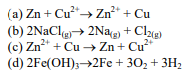
- A
Zn + Cu²+ → Zn²+ + Cu
- B
Fe + H2O → Fe2+ + OH-
- C
2H2 + O2 → 2H2O
- D
Ag+ + Cl- → AgCl
The correct answer is the reaction Zn + Cu²+ → Zn²+ + Cu. This reaction is spontaneous because it has a positive standard cell potential (E°). The reduction potential of Cu²+ (+0.34V) is greater than that of Zn²+ (-0.76V), indicating that Cu²+ is a stronger oxidizing agent than Zn²+. Therefore, Cu²+ can oxidize Zn, making the reaction spontaneous.
The other options are incorrect because they do not meet the criteria for spontaneity under standard conditions. Option B involves Fe and water, which do not react spontaneously. Option C (2H2 + O2 → 2H2O) is not spontaneous without external energy input, and Option D (Ag+ + Cl- → AgCl) does not lead to a positive cell potential under standard conditions.
This reaction is spontaneous because the standard cell potential (E°) is positive. The reduction potential of Cu²+ (+0.34V) is greater than that of Zn²+ (-0.76V), making Cu²+ a stronger oxidizing agent.
This reaction is not spontaneous under standard conditions. The reduction potential of water is higher than that of Fe, so Fe does not readily oxidize in the presence of water at standard conditions.
This reaction is spontaneous under standard conditions, but it requires an external activation energy such as a spark or flame to initiate, making it non-spontaneous without this energy input.
This reaction is not spontaneous under standard conditions because the formation of AgCl from Ag+ and Cl- does not result in a positive cell potential.
Tagged under Chemistry · Thermochemistry · 2016