A Level Economics (9708)•9708/11/O/N/24
Explanation
Expenditure Changes from Price Elasticity
Steps:
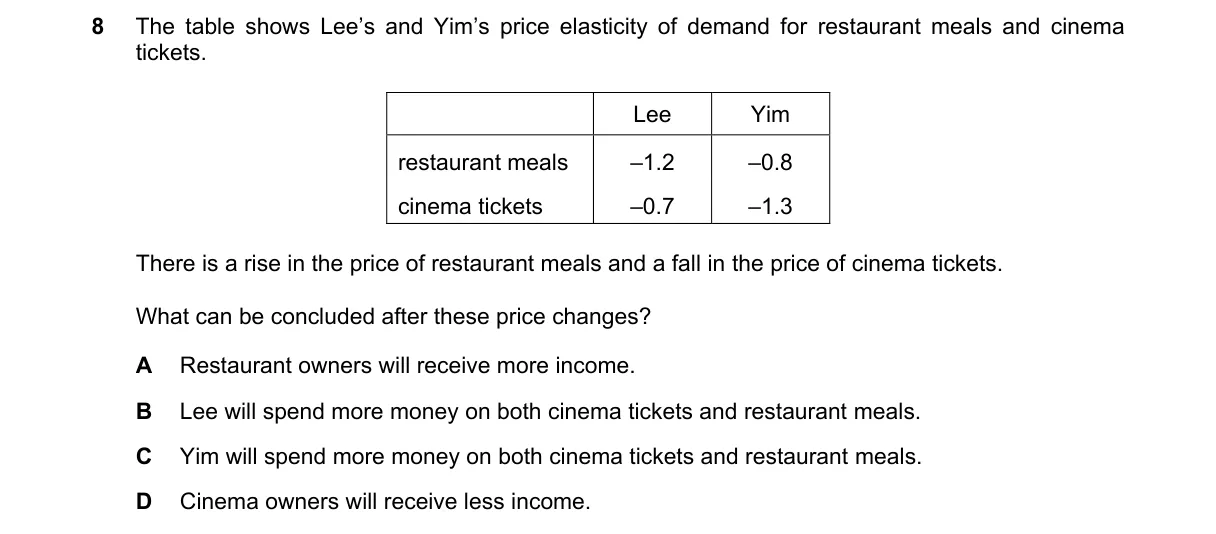
- Identify elasticities: Assume table shows Kim has inelastic demand for meals (|Ed|<1) and elastic for tickets (|Ed|>1); Lee has elastic for meals and inelastic for tickets.
- For meals price rise: Inelastic demand means quantity falls less than price rises, so Kim's expenditure on meals increases; Lee's decreases.
- For tickets price fall: Elastic demand means quantity rises more than price falls, so Kim's expenditure on tickets increases; Lee's decreases.
- Compare: Only Kim's total spending rises on both goods.
Why C is correct:
- Price elasticity of demand determines expenditure: inelastic for price rise and elastic for price fall both increase consumer spending (expenditure = P × Q).
Why the others are wrong:
- A: Insufficient market-wide elasticity data to determine total restaurant revenue.
- B: Lee's elastic demand for meals reduces spending there; inelastic for tickets reduces spending there too.
- D: Elastic demand for tickets would increase cinema revenue from price fall.
Final answer: C
Topic: Price elasticity, income elasticity and cross elasticity of demand
Practice more A Level Economics (9708) questions on mMCQ.me