A Level Economics (9708)•9708/12/O/N/23
Explanation
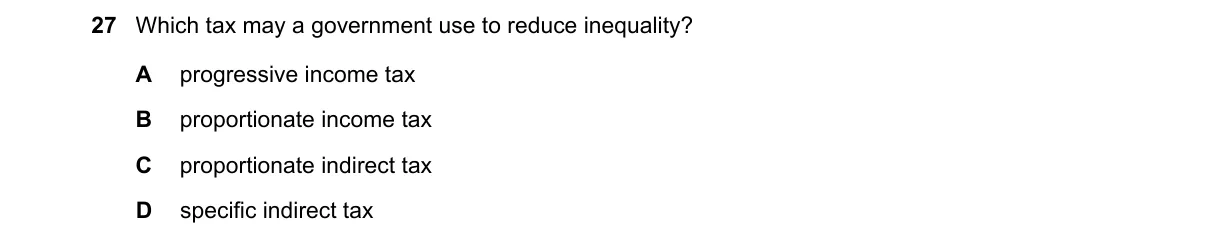
Progressive taxation reduces income inequality
Steps:
- Identify inequality as the gap between rich and poor incomes.
- Recall tax types: progressive (higher rates for higher incomes), proportionate (flat rate), indirect (on goods/services).
- Evaluate how each affects income distribution: progressive shifts burden to wealthy, reducing gaps.
- Select the tax that directly targets high earners to promote equity.
Why A is correct:
- Progressive income tax applies higher rates to larger incomes, redistributing wealth from rich to poor via government spending on social programs.
Why the others are wrong:
- B: Proportionate income tax charges the same rate regardless of income, maintaining inequality.
- C: Proportionate indirect tax (e.g., flat sales tax) burdens low-income groups more relative to earnings, increasing inequality.
- D: Specific indirect tax (fixed amount per unit) is regressive, hitting low earners harder proportionally.
Final answer: A
Topic: Equity and redistribution of income and wealth
Practice more A Level Economics (9708) questions on mMCQ.me