Explanation
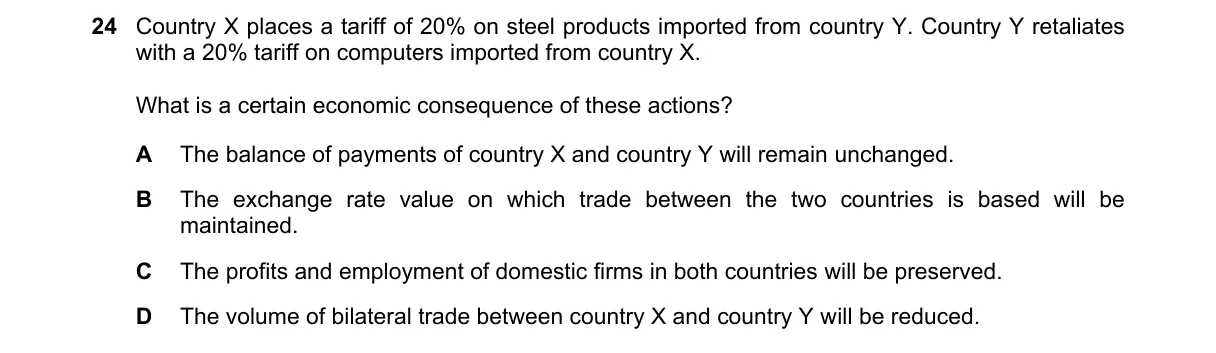
Tariffs and Retaliatory Trade Barriers Reduce Bilateral Trade Steps: - Country X imposes a 20% tariff on steel from Y, raising the price of Y's steel in X and reducing X's imports from Y. - Country Y retaliates with a 20% tariff on computers from X, increasing the cost of X's computers in Y and decreasing Y's imports from X. - Higher prices from tariffs make goods less competitive, leading consumers and firms to buy fewer imported items. - This mutual reduction in imports lowers the overall volume of trade exchanged between the two countries. Why D is correct: - Tariffs act as trade barriers that increase import prices, directly reducing the quantity demanded and supplied in bilateral trade per basic international trade theory. Why the others are wrong: - A: Tariffs disrupt trade flows, creating net negative economic consequences like higher costs and inefficiencies for both countries. - B: Retaliatory tariffs can pressure exchange rates but do not guarantee maintenance; they often lead to depreciation in affected currencies. - C: Tariffs protect some domestic firms but harm others reliant …
Practice more A Level Economics (9708) questions on mMCQ.me