A Level Economics (9708)•9708/12/O/N/21
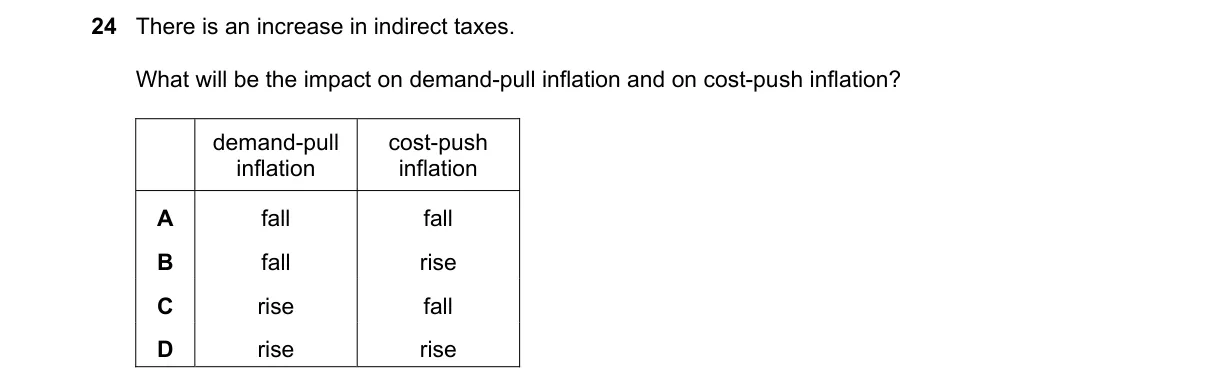
Explanation
Indirect taxes raise costs but curb demand
Steps:
- Indirect taxes (e.g., sales tax) increase production costs for firms by raising input prices.
- This shifts the aggregate supply curve leftward, boosting cost-push inflation.
- Higher taxes reduce consumers' disposable income and purchasing power.
- This decreases aggregate demand, lowering demand-pull inflation pressure.
Why B is correct:
- Cost-push inflation rises due to higher production costs (definition: inflation from supply-side cost increases); demand-pull falls as reduced spending curbs excess demand (definition: inflation from aggregate demand exceeding supply).
Why the others are wrong:
- A: Cost-push rises, not falls, from elevated production costs.
- C: Demand-pull falls, not rises, due to lower consumer spending.
- D: Demand-pull falls, not rises, despite cost-push increase.
Final answer: B
Topic: Fiscal policy
Practice more A Level Economics (9708) questions on mMCQ.me