A Level Economics (9708)•9708/12/O/N/21
Explanation
Cross-Price Demand Relationships
Steps:
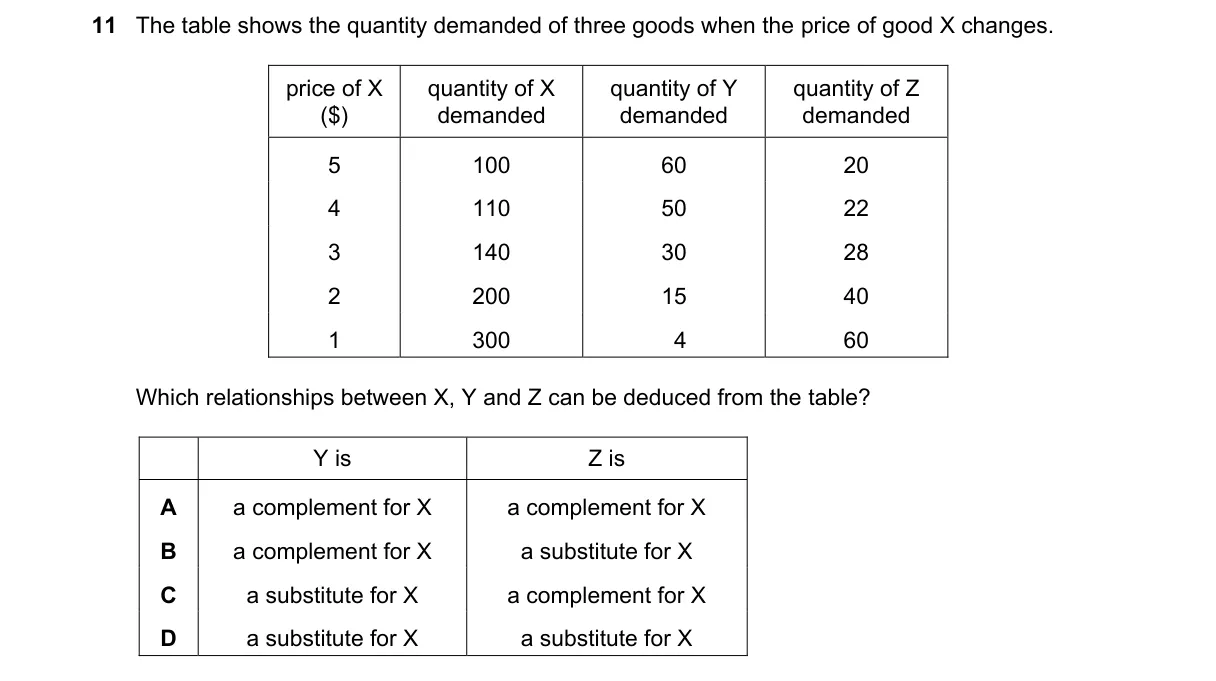
- As price of X falls from 5 to 1, quantity of X rises from 100 to 300, showing normal demand.
- Quantity of Y falls from 60 to 15 as price of X falls, so demand for Y moves inversely with price of X.
- Quantity of Z rises from 20 to 40 as price of X falls, so demand for Z moves directly with price of X.
- Inverse movement indicates substitutes; direct movement indicates complements, so Y is a substitute for X and Z is a complement for X.
Why C is correct:
- C states Y is a substitute (inverse quantity response to price change) and Z is a complement (direct quantity response), matching cross-price elasticity definitions.
Why the others are wrong:
- A: Wrongly calls Y a complement, but Y's quantity falls when X's price falls.
- B: Wrongly calls Z a substitute, but Z's quantity rises when X's price falls.
- D: Identical to B, so same error on Z.
Final answer: C
Topic: Price elasticity, income elasticity and cross elasticity of demand
Practice more A Level Economics (9708) questions on mMCQ.me