A Level Economics (9708)•9708/11/O/N/21
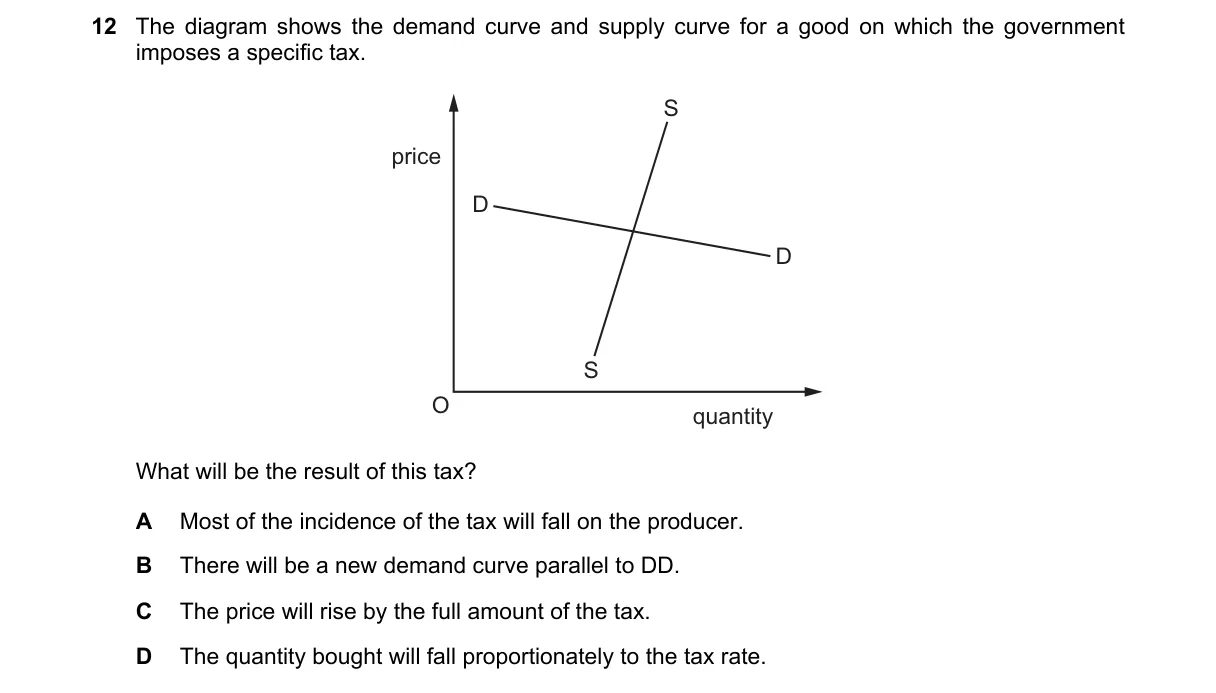
Explanation
Tax Incidence on Inelastic Demand
Steps:
- A specific tax shifts the supply curve upward by the tax amount, creating a wedge between what buyers pay and sellers receive.
- The new equilibrium quantity decreases, and price to buyers rises while price to sellers falls.
- Tax incidence is determined by relative elasticities: the less elastic side bears more of the burden.
- If demand is relatively inelastic (steeper curve) compared to supply, producers absorb most of the tax.
Why A is correct:
- Tax incidence theorem states that the burden falls more heavily on the party with the less elastic curve; here, inelastic demand means producers bear most via lower net price.
Why the others are wrong:
- B: Taxes shift supply, not demand; no parallel demand curve forms.
- C: Price rises by less than the full tax due to shared incidence.
- D: Quantity fall depends on elasticities, not direct proportionality to tax rate.
Final answer: A
Topic: Methods and effects of government intervention in markets
Practice more A Level Economics (9708) questions on mMCQ.me