A Level Economics (9708)•9708/11/O/N/20
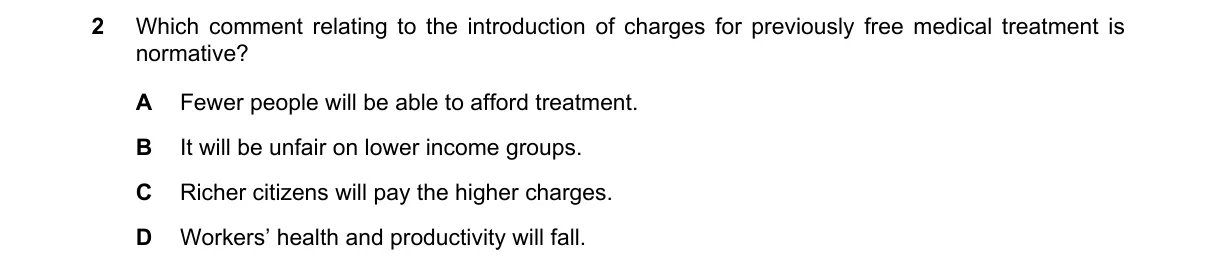
Explanation
Equity in Healthcare Charges
Steps:
- Identify the policy change: Introducing fees for previously free medical treatment shifts from universal access to cost-based access.
- Assess impacts: Evaluate how fees affect different socioeconomic groups in terms of affordability and fairness.
- Analyze options: Determine which comment best highlights a core ethical or economic concern without assuming unstated outcomes.
- Select best fit: Choose the option directly addressing inequity based on income disparities.
Why B is correct:
- B aligns with the principle of horizontal equity in public policy, where equal access to essential services like healthcare should not disproportionately burden lower-income groups, as fees act regressively relative to income.
Why the others are wrong:
- A: Assumes universal unaffordability, but many may still access treatment via subsidies or alternatives; not a direct equity comment.
- C: Misrepresents the charge structure; fees are typically flat, not progressive, so richer citizens may pay more absolutely but not proportionately.
- D: Speculates on indirect economic effects without evidence; focuses on productivity, not the core fairness of the policy.
Final answer: B
Topic: Equity and redistribution of income and wealth
Practice more A Level Economics (9708) questions on mMCQ.me