A Level Economics (9708)•9708/13/O/N/18
Explanation
Expansionary Monetary and Fiscal Policies to Increase Output
Steps:
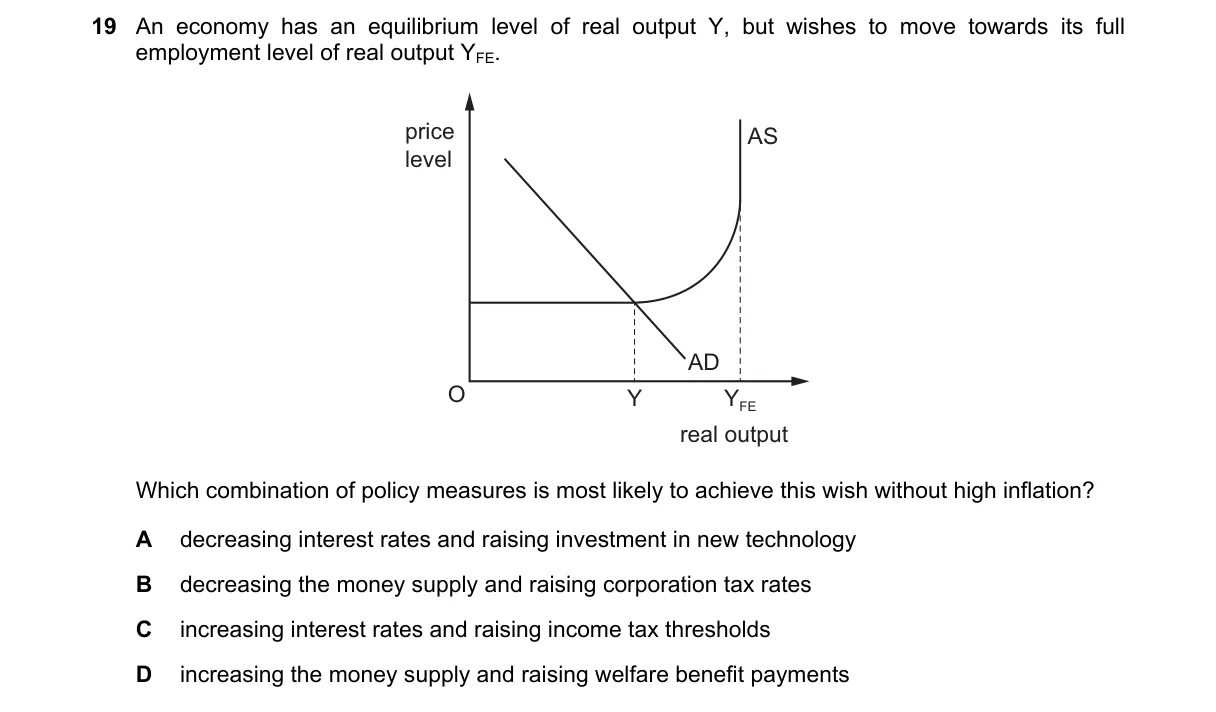
- Recognize economy has output gap (Y < Yf), allowing demand stimulus without immediate inflation.
- Identify expansionary policies: lower interest rates boost investment/consumption; tax credits encourage capital spending.
- Evaluate combinations for net AD increase targeting full employment.
- Select option aligning both monetary and fiscal tools for balanced growth.
Why A is correct:
- Decreasing rates (via IS-LM model) shifts LM curve right, lowering borrowing costs; investment tax credits reduce after-tax cost of capital, raising aggregate demand to close gap per AD-AS framework.
Why the others are wrong:
- B: Both actions contract AD—tight money raises rates, higher taxes cut profits/investment—worsening recession.
- C: Higher rates contract AD via reduced borrowing; tax threshold rise mildly expands consumption but net effect likely reduces output.
- D: Expands AD but welfare hikes target consumption without supply incentives, risking demand-pull inflation.
Final answer: A
Topic: Effectiveness of policy options to meet all macroeconomic objectives
Practice more A Level Economics (9708) questions on mMCQ.me