A Level Economics (9708)•9708/13/M/J/24
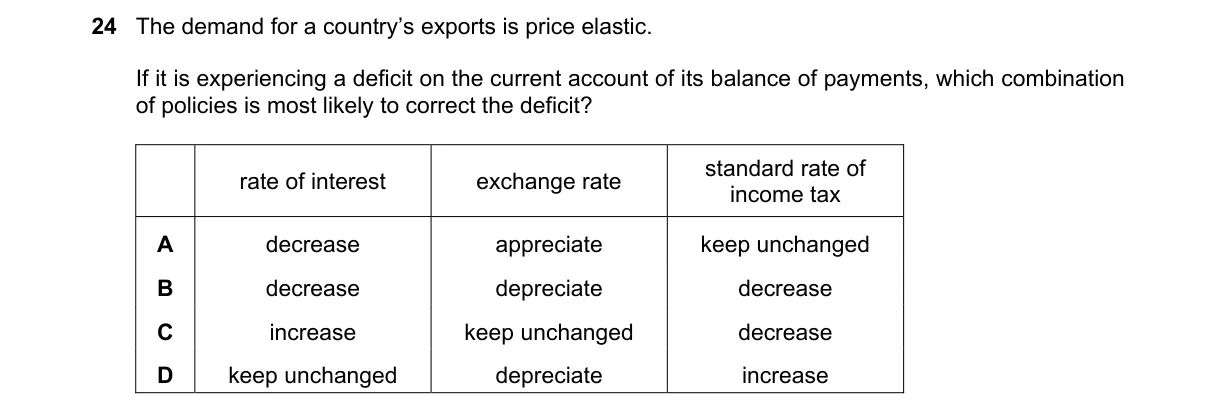
Explanation
Depreciation and expansionary fiscal policy improve trade balance Steps:
- Identify deficit cause: exports < imports, needing boost to net exports.
- Note elastic export demand: lower export prices via depreciation raise total export revenue (elasticity >1).
- Depreciate exchange rate: cheapens exports (increases quantity/revenue) and raises import costs (curbs imports).
- Cut income tax: expands fiscal policy, raises domestic income/spending on home goods, supporting growth without worsening trade via higher rates.
Why D is correct:
- Depreciation leverages elastic demand to surge exports (Marshall-Lerner condition), while tax cut stimulates economy to enhance production without interest hikes that appreciate currency.
Why the others are wrong:
- A: Interest cut depreciates currency, but specified appreciation harms exports; unchanged tax misses stimulus.
- B: Interest hike appreciates currency (reduces exports); unchanged exchange blocks depreciation benefits.
- C: Tax hike contracts economy, potentially cutting imports but also exports and growth, offsetting depreciation gains.
Final answer: D
Topic: Policies to correct imbalances in the current account of the balance of payments
Practice more A Level Economics (9708) questions on mMCQ.me