A Level Economics (9708)•9708/14/M/J/22
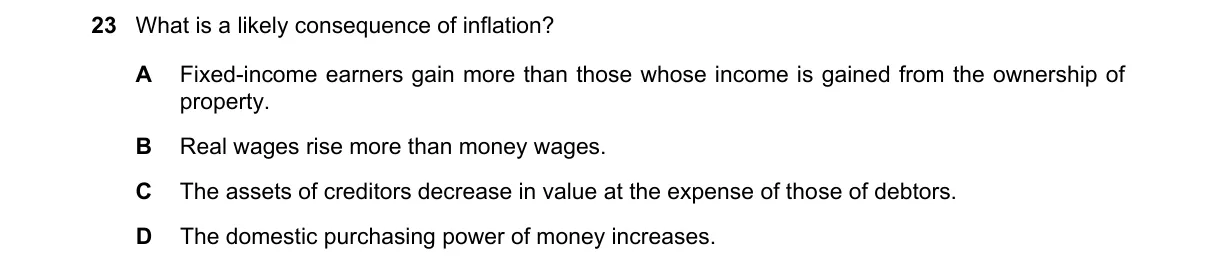
Explanation
Inflation's wealth transfer effect
Steps:
- Define inflation as a sustained increase in the general price level, reducing money's purchasing power.
- Identify how inflation affects different economic agents: it erodes the real value of fixed nominal payments.
- Analyze choices: focus on redistribution between creditors (lenders) and debtors (borrowers).
- Select the option showing inflation's typical debtor-favoring outcome.
Why C is correct:
- Inflation decreases the real value of money owed, so creditors receive payments with less purchasing power, transferring wealth to debtors (per the Fisher effect on nominal vs. real interest rates).
Why the others are wrong:
- A: Fixed-income earners lose purchasing power, while property owners often gain as asset values rise.
- B: Real wages typically fall or stagnate as money wages lag behind rising prices.
- D: Inflation decreases, not increases, the domestic purchasing power of money.
Final answer: C
Topic: Price stability
Practice more A Level Economics (9708) questions on mMCQ.me