A Level Economics (9708)•9708/12/M/J/22
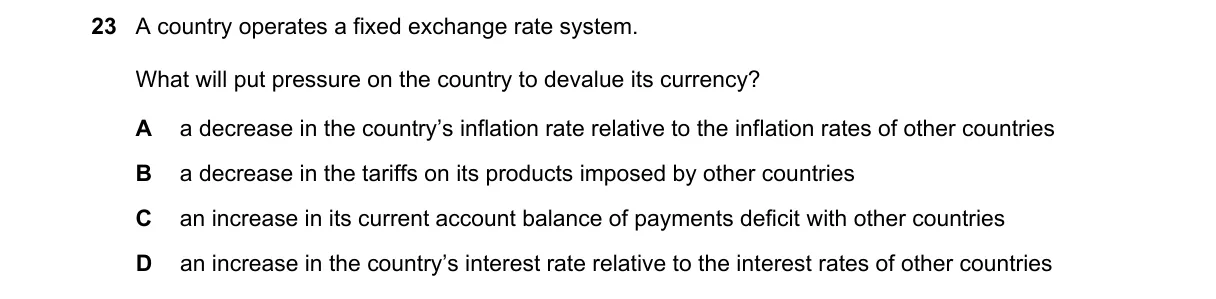
Explanation
Current Account Deficits Pressure Devaluation in Fixed Exchange Rates
Steps:
- In a fixed exchange rate, the central bank intervenes to maintain the currency's value against reserves.
- Pressure to devalue occurs when there's persistent excess supply of domestic currency in forex markets.
- A current account deficit reflects more imports than exports, increasing demand for foreign currency.
- This depletes reserves as the bank sells foreign currency to defend the peg, building devaluation pressure.
Why C is correct:
- Per balance of payments theory, a widening current account deficit creates sustained currency outflows, forcing devaluation to restore equilibrium without endless reserve loss.
Why the others are wrong:
- A: Lower relative inflation boosts export competitiveness, improving the trade balance and pressuring appreciation.
- B: Reducing import tariffs may increase imports and deficits indirectly, but does not directly cause devaluation pressure like the deficit itself.
- D: Higher relative interest rates attract capital inflows, strengthening the currency and pressuring appreciation.
Final answer: C
Topic: Exchange rates
Practice more A Level Economics (9708) questions on mMCQ.me