A Level Economics (9708)•9708/12/M/J/21
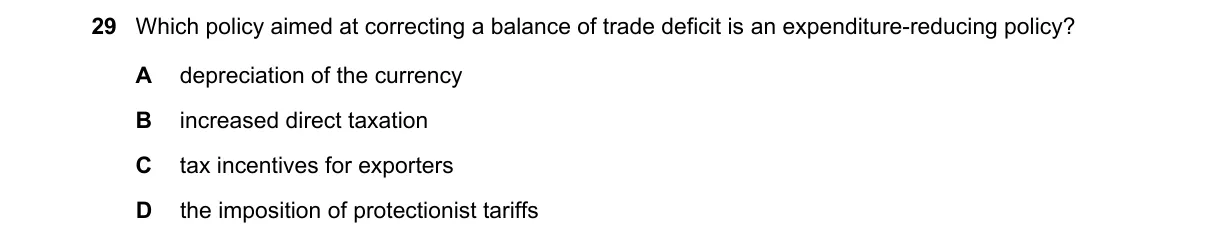
Explanation
Expenditure-Reducing Policies Reduce Domestic Spending to Fix Trade Deficits
Steps:
- Define balance of trade deficit as exports less than imports, requiring policies to boost exports or cut imports.
- Classify expenditure-reducing policies as those that lower aggregate demand via fiscal contraction, like higher taxes.
- Assess options: identify which directly reduces spending without switching expenditure between domestic and foreign goods.
- Confirm B fits by reducing consumer and business spending power.
Why B is correct:
- Increased direct taxation lowers disposable income, reducing domestic consumption and imports per the absorption approach (trade balance = output - absorption).
Why the others are wrong:
- A: Depreciation switches expenditure by making exports cheaper and imports costlier, not reducing total spending.
- C: Tax incentives for exporters boost export supply without cutting domestic absorption.
- D: Protectionist tariffs reduce imports by raising their price, switching demand to domestic goods.
Final answer: B
Topic: Policies to correct imbalances in the current account of the balance of payments
Practice more A Level Economics (9708) questions on mMCQ.me