A Level Economics (9708)•9708/12/M/J/21
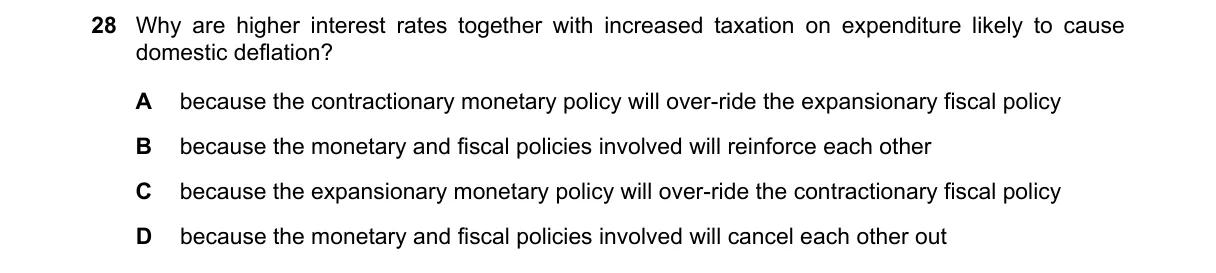
Explanation
Reinforcing contractionary policies reduce aggregate demand
Steps:
- Higher interest rates represent contractionary monetary policy, discouraging borrowing and investment.
- Increased taxes on expenditure represent contractionary fiscal policy, reducing consumer spending.
- Both policies decrease aggregate demand in the economy.
- Lower aggregate demand leads to falling prices, causing deflation.
Why B is correct:
- Contractionary monetary and fiscal policies both reduce spending, reinforcing each other to shift the aggregate demand curve leftward per the AD-AS model.
Why the others are wrong:
- A: Increased taxes are contractionary fiscal policy, not expansionary.
- C: Higher interest rates are contractionary monetary policy, not expansionary.
- D: The policies amplify, rather than cancel, deflationary pressures.
Final answer: B
Topic: Effectiveness of policy options to meet all macroeconomic objectives
Practice more A Level Economics (9708) questions on mMCQ.me