A Level Economics (9708)•9708/11/M/J/20
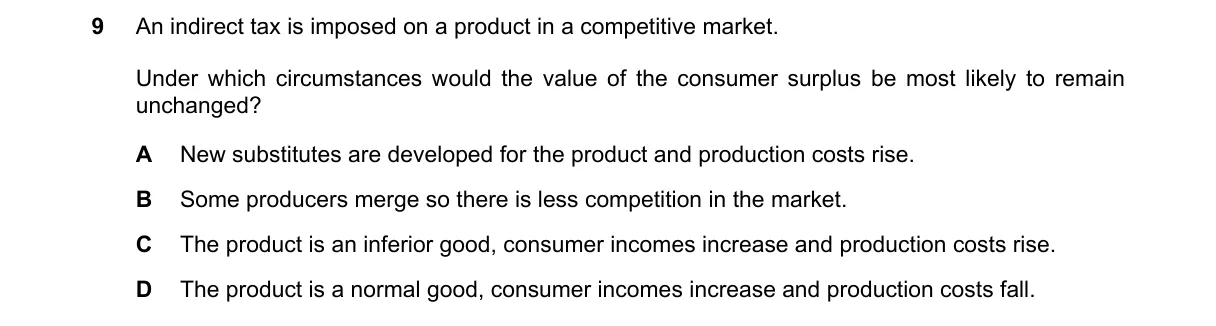
Explanation
Offsetting Demand and Supply Shifts Preserve Consumer Surplus
Steps:
- Define consumer surplus as the area between the demand curve and market price up to quantity sold.
- Evaluate each option's impact on demand (willingness to pay) and supply (production costs/competition).
- Identify shifts: rightward for increased demand/supply, leftward for decreased.
- Determine net effect on equilibrium price/quantity and surplus area.
Why D is correct:
- For a normal good, income rise shifts demand right (higher willingness to pay); rising costs shift supply left (higher price), offsetting to maintain similar equilibrium and surplus per the supply-demand model.
Why the others are wrong:
- A: Substitutes shift demand left (lower willingness), costs rise shift supply left (higher price), both reduce surplus.
- B: Mergers reduce competition, shifting supply left (higher prices), decreasing surplus.
- C: Income rise shifts demand right, falling costs shift supply right, both expand market and increase surplus.
Final answer: D
Topic: Consumer and producer surplus
Practice more A Level Economics (9708) questions on mMCQ.me