A Level Economics (9708)•9708/12/M/J/19
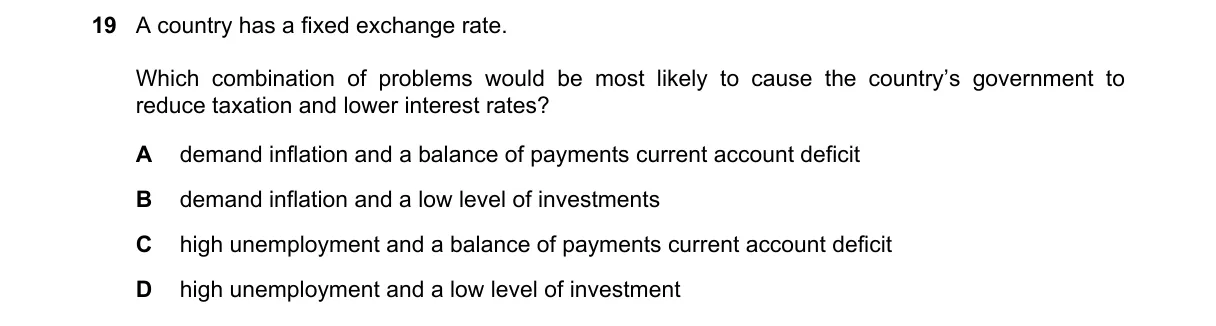
Explanation
Expansionary Policy in Fixed Exchange Rates
Steps:
- Identify policy: Reducing taxation (fiscal expansion) and lowering interest rates (monetary expansion) boosts aggregate demand.
- Context: Fixed exchange rate limits independent monetary policy; expansion suits domestic recession over external imbalances.
- Match problems: High unemployment and low investment signal weak demand, needing stimulus without inflation pressure.
- Rule out: Inflation or BOP deficits require contraction or capital inflows via higher rates.
Why D is correct:
- Keynesian policy: Expansionary measures increase AD via C + I + G + (X-M), lowering unemployment and raising investment.
Why the others are wrong:
- A: Demand inflation requires contractionary policy to curb rising prices; BOP deficit needs higher rates for capital inflows.
- B: Demand inflation demands reduced spending, not tax cuts or lower rates.
- C: BOP deficit in fixed rates requires higher interest rates to defend currency, conflicting with lowering them.
Final answer: D
Topic: Government macroeconomic policy objectives
Practice more A Level Economics (9708) questions on mMCQ.me