A Level Economics (9708)•9708/13/M/J/18
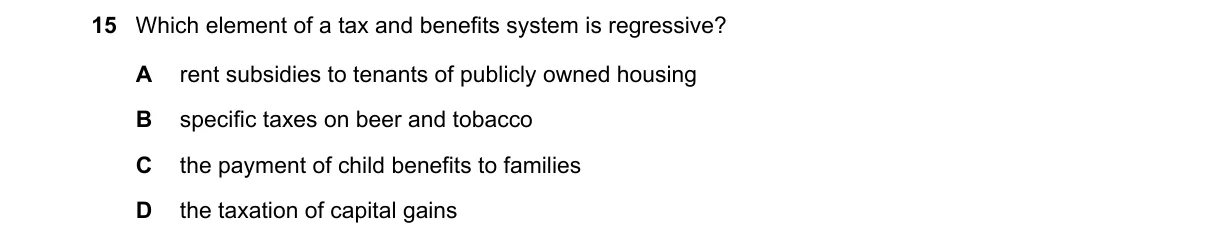
Explanation
Regressive elements burden low incomes more proportionally
Steps:
- Define regressive: A tax or system where lower-income groups pay a higher proportion of income than higher-income groups.
- Evaluate options: Check if each imposes fixed costs (regressive for taxes) or aids low incomes more (progressive for benefits).
- Identify fixed-amount taxes: These hit low earners harder as a share of income.
- Confirm via examples: Excise taxes like on luxuries are classic regressive cases.
Why B is correct:
- Specific (excise) taxes on beer and tobacco are fixed per unit, taking a larger income share from low earners, per economic definitions of regressivity.
Why the others are wrong:
- A: Rent subsidies reduce housing costs more for low-income tenants, making them progressive.
- C: Child benefits provide flat payments that disproportionately aid lower-income families, progressive.
- D: Capital gains tax applies mainly to high earners with investment income, progressive in structure.
Final answer: B
Topic: Equity and redistribution of income and wealth
Practice more A Level Economics (9708) questions on mMCQ.me