A Level Economics (9708)•9708/13/M/J/18
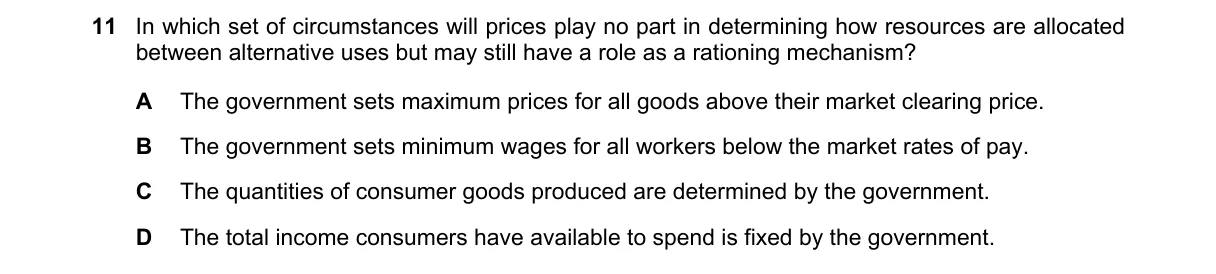
Explanation
Prices as Non-Allocation but Rationing Device in Wage Floors
Steps:
- Identify the question: Scenarios where prices do not guide resource allocation (e.g., via supply/demand) but still ration scarce goods/services.
- Recall market role: Prices allocate resources by signaling scarcity and directing production/consumption; rationing occurs when prices limit access.
- Evaluate choices: Check if government intervention overrides price signals for allocation while retaining rationing (e.g., queues or limits).
- Select best fit: Minimum wages below market distort labor allocation but use wage thresholds to ration jobs.
Why C is correct:
- Minimum wages below market rates prevent prices (wages) from equating labor supply/demand, so allocation shifts to non-price factors (e.g., favoritism); wages still ration jobs by excluding lower bidders, per labor economics definition of binding floors.
Why the others are wrong:
- A: Maximum prices above equilibrium allow market prices to allocate resources normally, not overriding them.
- B: Government production quotas eliminate price signals entirely for both allocation and rationing.
- D: Fixed incomes alter effective demand but prices still allocate via relative purchasing power.
Final answer: C
Topic: Resource allocation in different economic systems
Practice more A Level Economics (9708) questions on mMCQ.me