A Level Economics (9708)•9708/12/M/J/18
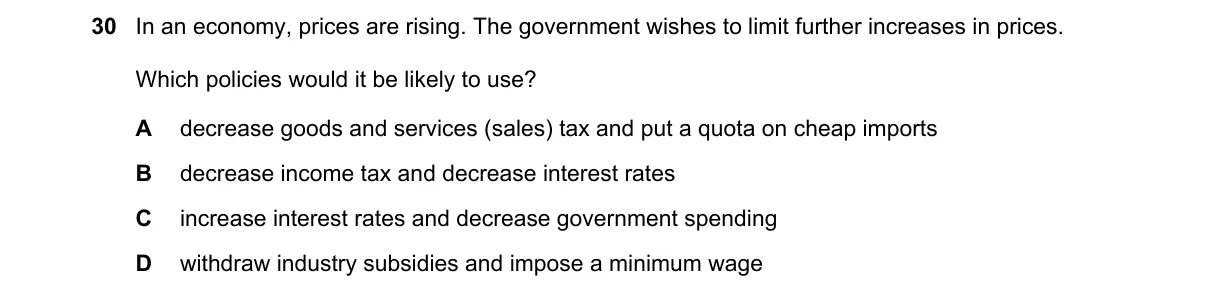
Explanation
Contractionary Policies to Curb Inflation
Steps:
- Identify the problem: Rising prices indicate inflation, caused by excess demand or money supply.
- Recall policy tools: Governments use monetary (interest rates) and fiscal (spending/taxes) policies to control inflation.
- Evaluate options: Seek policies that reduce aggregate demand or money supply to lower price pressures.
- Select best fit: Contractionary measures like higher rates and less spending directly target inflation.
Why C is correct:
- Increasing interest rates raises borrowing costs, reducing money supply and spending (monetary policy); decreasing government spending lowers aggregate demand (fiscal policy), both curbing inflation per Keynesian economics.
Why the others are wrong:
- A: Decreasing taxes and import quotas boost supply short-term but increase demand and protectionism, worsening inflation.
- B: Lower income taxes and interest rates expand money supply and disposable income, fueling demand-pull inflation.
- D: Withdrawing subsidies raises production costs; minimum wage hikes labor costs, both pushing prices up.
Final answer: C
Topic: Government macroeconomic policy objectives
Practice more A Level Economics (9708) questions on mMCQ.me