A Level Economics (9708)•9708/12/M/J/18
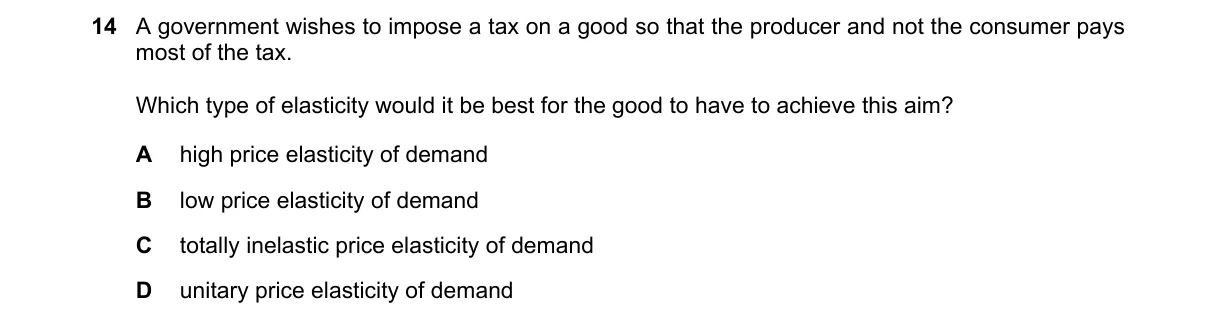
Explanation
Tax Incidence and Elasticity of Demand
Steps:
- Tax on a good raises price for consumers and lowers net price for producers; incidence depends on relative elasticities.
- Burden falls more on the less elastic side: inelastic demand means consumers pay more, elastic demand means producers pay more.
- To shift most burden to producers, demand must be highly elastic so quantity demanded drops sharply with price rise.
- High elasticity forces producers to absorb tax via lower net receipts to maintain sales.
Why A is correct:
- High price elasticity means consumers reduce quantity significantly when price rises, so producers bear most tax to avoid lost sales (per tax incidence theorem).
Why the others are wrong:
- B: Low elasticity means consumers bear more tax as they continue buying despite price increase.
- C: Totally inelastic demand places entire tax burden on consumers, who buy the same amount regardless of price.
- D: Unitary elasticity splits tax burden equally between consumers and producers.
Final answer: A
Topic: Price elasticity, income elasticity and cross elasticity of demand
Practice more A Level Economics (9708) questions on mMCQ.me