A Level Accounting (9706)•9706/13/O/N/23
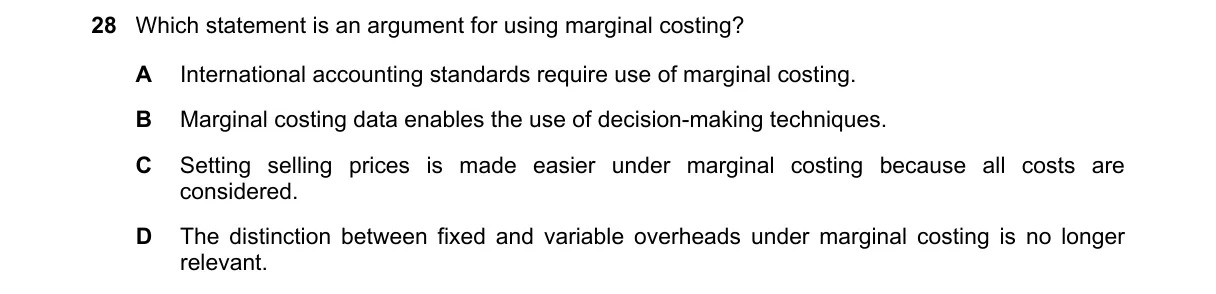
Explanation
Marginal costing aids decision-making by focusing on variable costs
Steps:
- Identify marginal costing as a method that separates variable costs (relevant for decisions) from fixed costs.
- Evaluate each option against key benefits of marginal costing, such as supporting techniques like break-even analysis.
- Confirm B aligns with how marginal data highlights contribution margins for choices like make-or-buy.
- Rule out others as they misrepresent standards, pricing, or core principles.
Why B is correct:
- Marginal costing classifies costs into fixed and variable, enabling decision tools like CVP analysis via contribution margin = sales - variable costs.
Why the others are wrong:
- A: International standards (IAS 2) require absorption costing for inventory valuation, not marginal.
- C: Marginal costing emphasizes variable costs for pricing, ignoring fixed costs, which complicates full consideration.
- D: The fixed-variable distinction is fundamental to marginal costing for relevance in short-term decisions.
Final answer: B
Topic: Traditional costing methods
Practice more A Level Accounting (9706) questions on mMCQ.me