A Level Accounting (9706)•9706/13/O/N/19
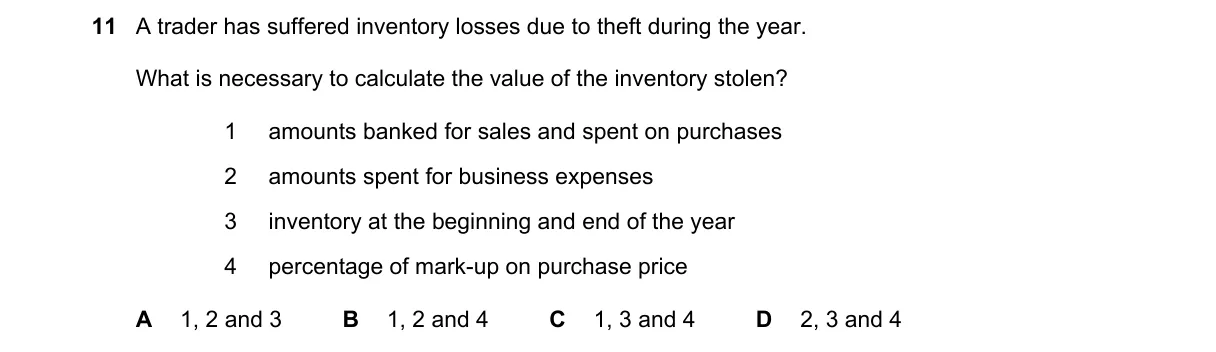
Explanation
Inventory Valuation for Theft Losses Steps:
- Identify key inventory equation: Beginning inventory + Purchases = Cost of Goods Sold + Ending inventory + Losses (e.g., theft).
- Isolate theft value: Losses = (Beginning inventory + Purchases + Other additions) - (Ending inventory + COGS + Other deductions).
- Determine required data: Need beginning inventory (1) and physical count of ending inventory (3) to compute shrinkage, assuming standard adjustments for sales/purchases.
- Verify: Theft value requires pre-theft and post-theft inventory levels, excluding normal sales.
Why C is correct:
- C (1 and 3) provides beginning inventory and ending physical count, essential per accounting standards (e.g., IAS 2) to calculate shrinkage as theft.
Why the others are wrong:
- A includes unnecessary 2 (likely sales data), inflating requirements.
- B adds irrelevant 4 (possibly adjustments), not core to basic theft calc.
- D omits critical 1 and 3, relying only on secondary items.
Not enough information on exact definitions of 1-4.
Final answer: C
Topic: Reconciliation and verification
Practice more A Level Accounting (9706) questions on mMCQ.me