A Level Accounting (9706)•9706/12/O/N/18
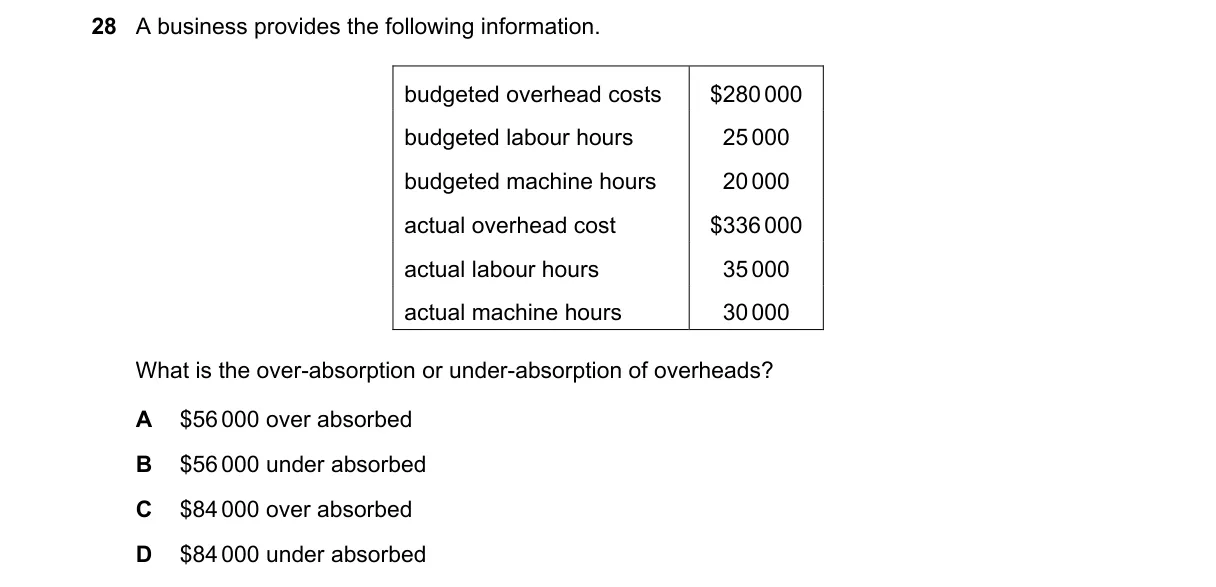
Explanation
Overhead absorption variance cannot be calculated without actual overhead costs and specified base
Steps:
- Identify the predetermined overhead rate: requires choosing absorption base (labor or machine hours) and dividing budgeted overhead ($25,000) by budgeted base hours.
- Calculate absorbed overhead: multiply rate by actual base hours (35,000 labor or 30,000 machine).
- Determine variance: subtract actual overhead costs from absorbed overhead (positive = over-absorbed; negative = under-absorbed).
- Note missing data: actual overhead costs not provided; base not specified.
Why A is correct:
- Not enough information to confirm any option, as actual overhead and absorption base are required per standard costing formula (variance = absorbed overhead - actual overhead).
Why the others are wrong:
- B: Assumes machine-hour base and absorption on labor hours, yielding ~$4,000 over, but ignores missing actual costs.
- C: Assumes labor-hour base with under-absorption, but actual activity higher suggests over if fixed overhead.
- D: Possible if variable overhead with machine base, but data insufficient.
Final answer: Not enough information.
Topic: Traditional costing methods
Practice more A Level Accounting (9706) questions on mMCQ.me