A Level Accounting (9706)•9706/13/M/J/24
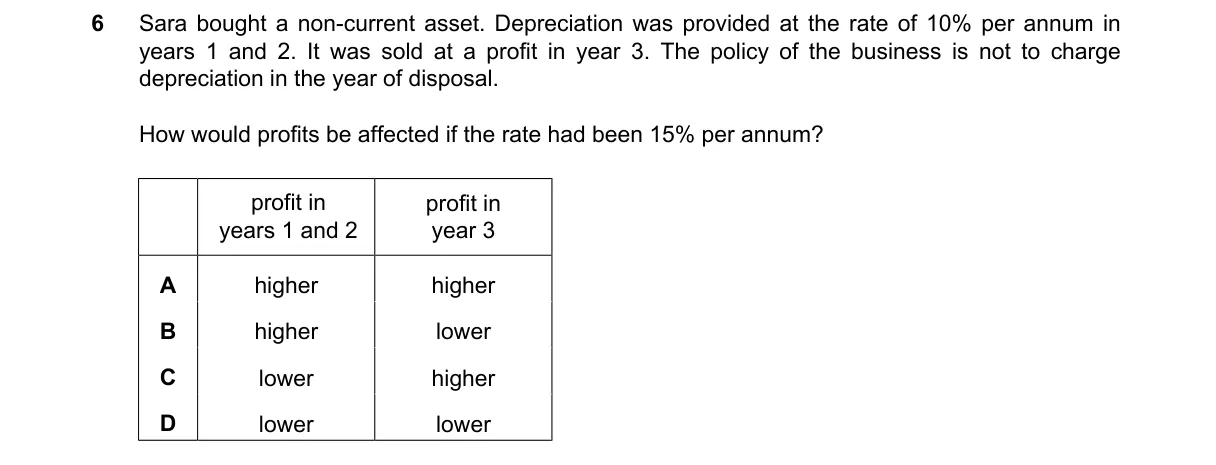
Explanation
Impact of Higher Depreciation Rate on Annual Profits Steps:
- Assume straight-line depreciation on cost C; original 10% means year 1 expense = 0.1C (profit lower by extra 0.05C at 15%).
- Year 2 expense = 0.1C originally vs. 0.15C at 15%, so higher expense reduces year 2 profit.
- Book value end year 2: 0.8C originally vs. 0.7C at 15%; no year 3 depreciation in either case.
- Year 3 profit on sale = sale price S (where S > 0.8C) minus book value; lower book value at 15% increases gain by 0.1C.
Why B is correct:
- Per IAS 16, higher depreciation expense decreases profits in charging years, but reduces carrying amount, increasing disposal gain (S - lower BV).
Why the others are wrong:
- A: Higher expenses in years 1-2 cannot make all profits higher.
- C: Year 1 profit lower due to higher initial expense, not higher.
- D: Year 3 profit higher from larger gain on sale, not lower.
Final answer: B
Topic: Accounting for non-current assets
Practice more A Level Accounting (9706) questions on mMCQ.me