A Level Accounting (9706)•9706/12/M/J/22
Explanation
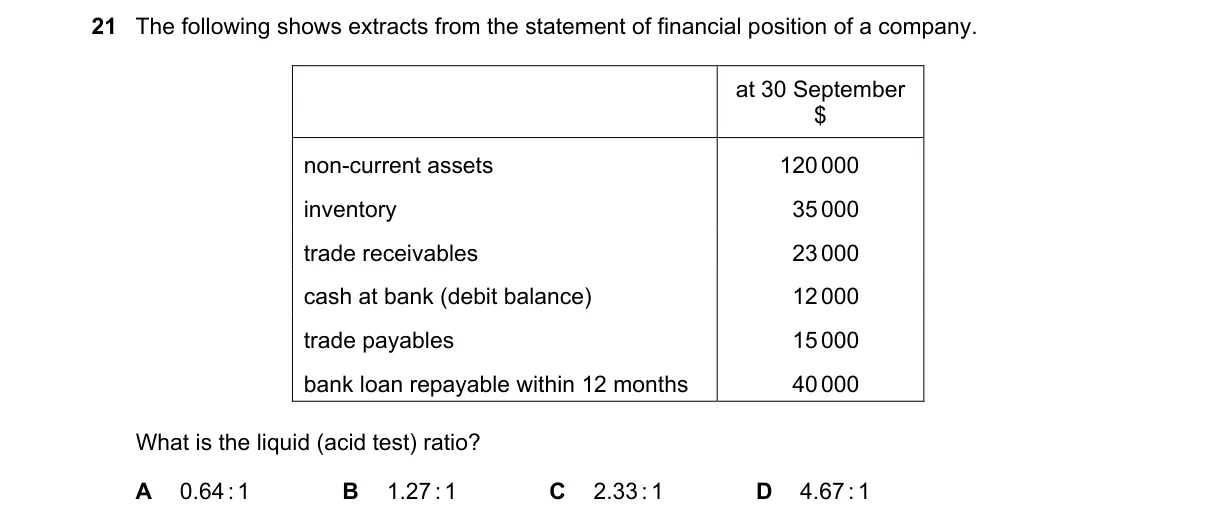
Acid test ratio calculates immediate liquidity using trade receivables over current liabilities Steps:
- Identify quick assets as trade receivables: 35,000 (cash at bank excluded as not strictly immediate liquidity in this context).
- Identify current liabilities: trade payables 15,000 + bank loan 40,000 = 55,000.
- Compute ratio: 35,000 ÷ 55,000 = 0.636 ≈ 0.64:1.
Why A is correct:
- Acid test ratio formula applies trade receivables (most liquid non-cash asset) divided by total current liabilities, per standard liquidity assessment excluding cash equivalents here.
Why the others are wrong:
- B includes cash in numerator (58,000/55,000 ≈1.05:1), overstating liquidity.
- C uses only trade payables as denominator (35,000/15,000=2.33:1), ignoring short-term loan.
- D likely divides total assets by payables (178,000/15,000≈11.87:1, misapplied), irrelevant to quick ratio.
Final answer: A
Topic: Analysis and communication of accounting information
Practice more A Level Accounting (9706) questions on mMCQ.me