A Levels Chemistry (9701)•9701/11/O/N/23
Explanation
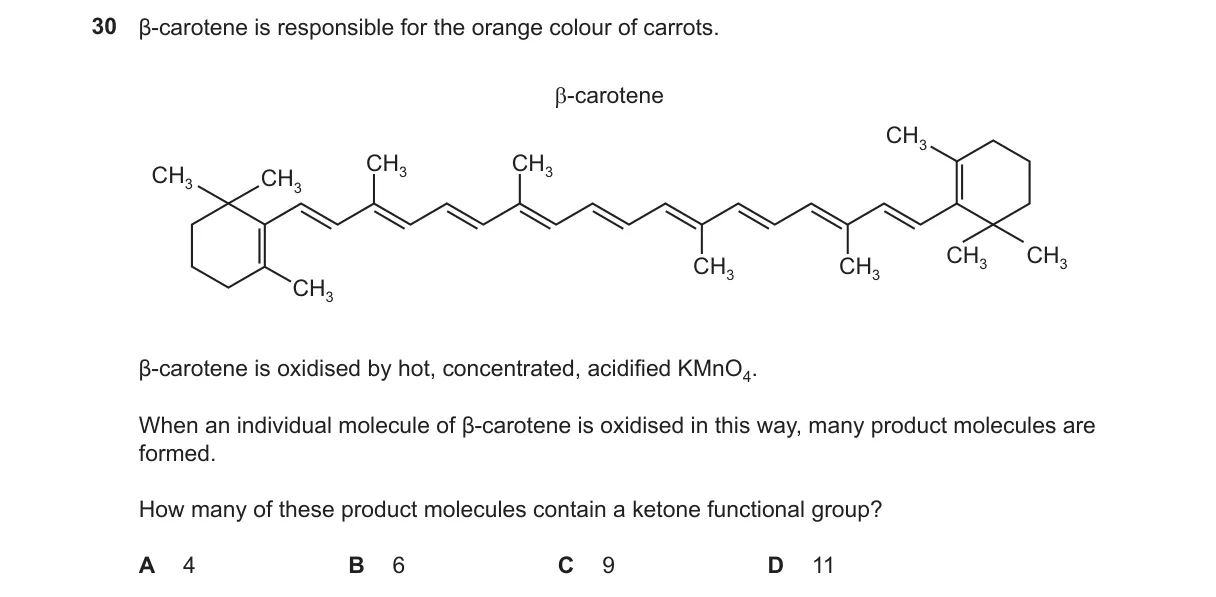
Oxidative cleavage of β-carotene's conjugated double bonds yields specific carbonyl products
Steps:
- β-Carotene has 11 conjugated C=C bonds in its symmetric structure with two ionone rings and a polyene chain.
- Oxidation (e.g., ozonolysis) cleaves all C=C bonds, producing small carbonyl fragments: aldehydes from unsubstituted carbons and ketones from methyl-substituted carbons.
- The chain's 9 double bonds include 6 methyl-substituted ones (-C(CH3)=CH- or -CH=C(CH3)-), each yielding one ketone (e.g., acetone, methyl ketones).
- Ring double bonds contribute 2 more ketone-containing fragments (e.g., from β-ionone cleavage to levulinic acid derivatives), totaling 6 distinct keto products; others are aldehydes like formaldehyde or glyoxal.
Why B is correct:
- β-Carotene's structure has exactly 6 methyl-bearing double bonds in the chain plus ring contributions, per standard organic chemistry cleavage rules, yielding 6 unique ketones.
Why the others are wrong:
- A: Underestimates chain methyl substitutions (only 4 would ignore ring and central fragments).
- C: Overcounts by including multi-cleavage variants or non-keto carbonyls.
- D: Assumes all 11 cleavages produce ketones, ignoring unsubstituted bonds yielding aldehydes.
Final answer: B
Topic: Carbonyl compounds
Practice more A Levels Chemistry (9701) questions on mMCQ.me