A Levels Chemistry (9701)•9701/12/O/N/19
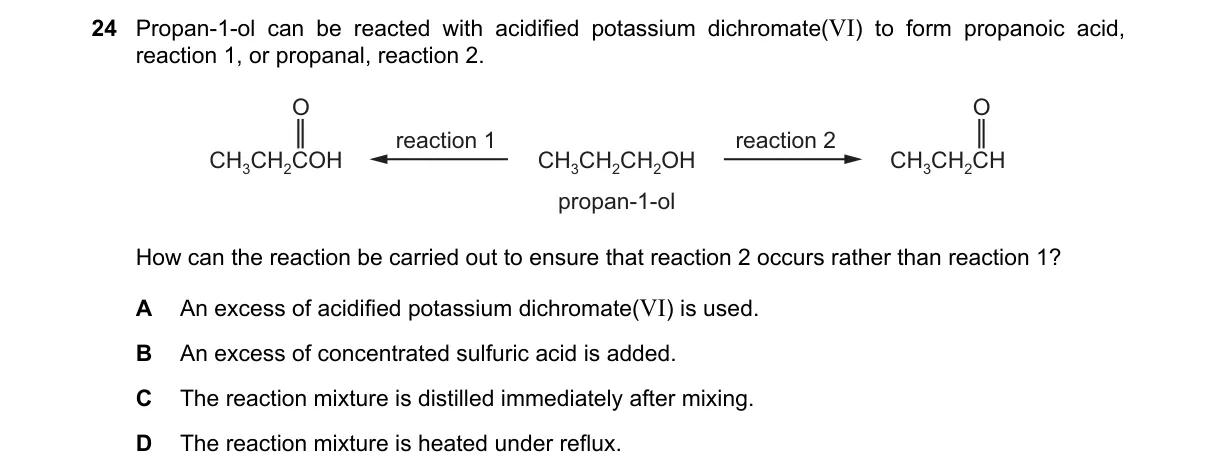
Explanation
Oxidation of primary alcohols to carboxylic acids requires reflux
Steps:
- Primary alcohols oxidize to aldehydes, then carboxylic acids with excess dichromate(VI).
- Aldehydes are volatile and can escape if distilled early, halting at aldehyde stage.
- Reflux condenses vapors, keeping intermediates in mixture for complete oxidation.
- Excess oxidant ensures both steps occur, yielding carboxylic acid.
Why D is correct:
- Heating under reflux retains the intermediate propanal, allowing reaction 2 to form propanoic acid, as per standard oxidation procedure for carboxylic acids.
Why the others are wrong:
- A: Excess dichromate is used but alone doesn't prevent aldehyde loss; reflux is also needed.
- B: Sulfuric acid catalyzes but excess concentrated isn't specifically required for this oxidation.
- C: Immediate distillation isolates propanal after reaction 1, preventing further oxidation to acid.
Final answer: D
Topic: Hydroxy compounds
Practice more A Levels Chemistry (9701) questions on mMCQ.me