Explanation
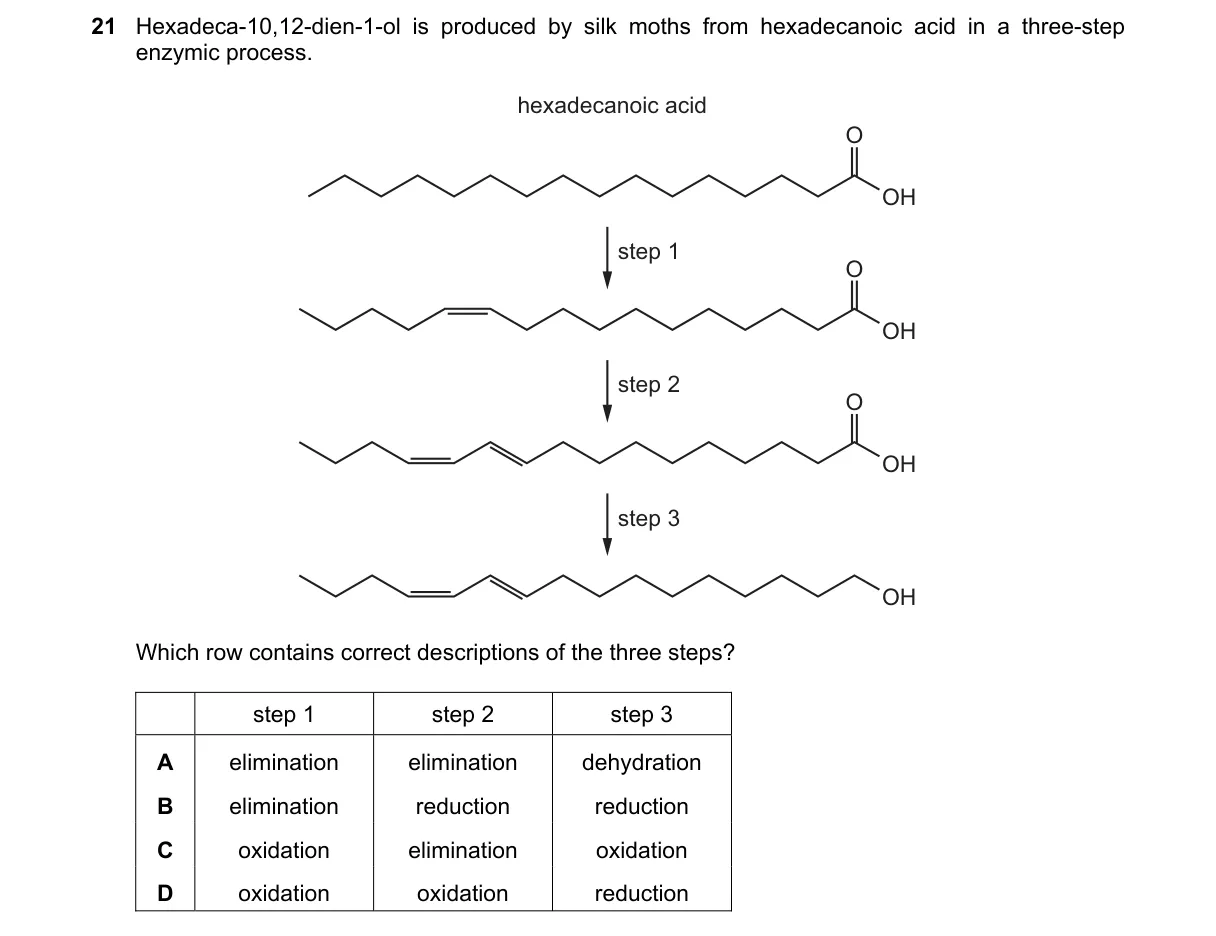
Identifying reaction sequence in organic chemistry Steps: - Examine the choices for common reaction types: oxidation (gain of oxygen/loss of hydrogen), elimination (loss of small molecule like HX), reduction (gain of hydrogen/loss of oxygen). - Match to typical multi-step syntheses, such as converting an alcohol to an alkane via intermediate alkene. - Rule out duplicates or illogical pairs, like two eliminations or two oxidations. - Confirm D aligns with oxidation to carbonyl, elimination to alkene, reduction to alkane. Why D is correct: - In alcohol-to-alkane conversion, oxidation forms a carbonyl (e.g., R-CH2OH to R-CHO), elimination yields alkene (e.g., via dehydration or dehydrohalogenation), and reduction hydrogenates to alkane (follows reaction mechanisms in organic synthesis). Why the others are wrong: - A: Two eliminations are redundant; dehydration is a type of elimination, not a separate step. - B: Elimination followed by two reductions mismatches standard sequences lacking initial bond breaking. - C: Two oxidations over-oxidize without balancing the elimination needed for unsaturation. Not enough information on the exact starting material or product to fully verify, but D fits standard patterns. Final answer: …
Practice more A Levels Chemistry (9701) questions on mMCQ.me