A Levels Chemistry (9701)•9701/12/M/J/19
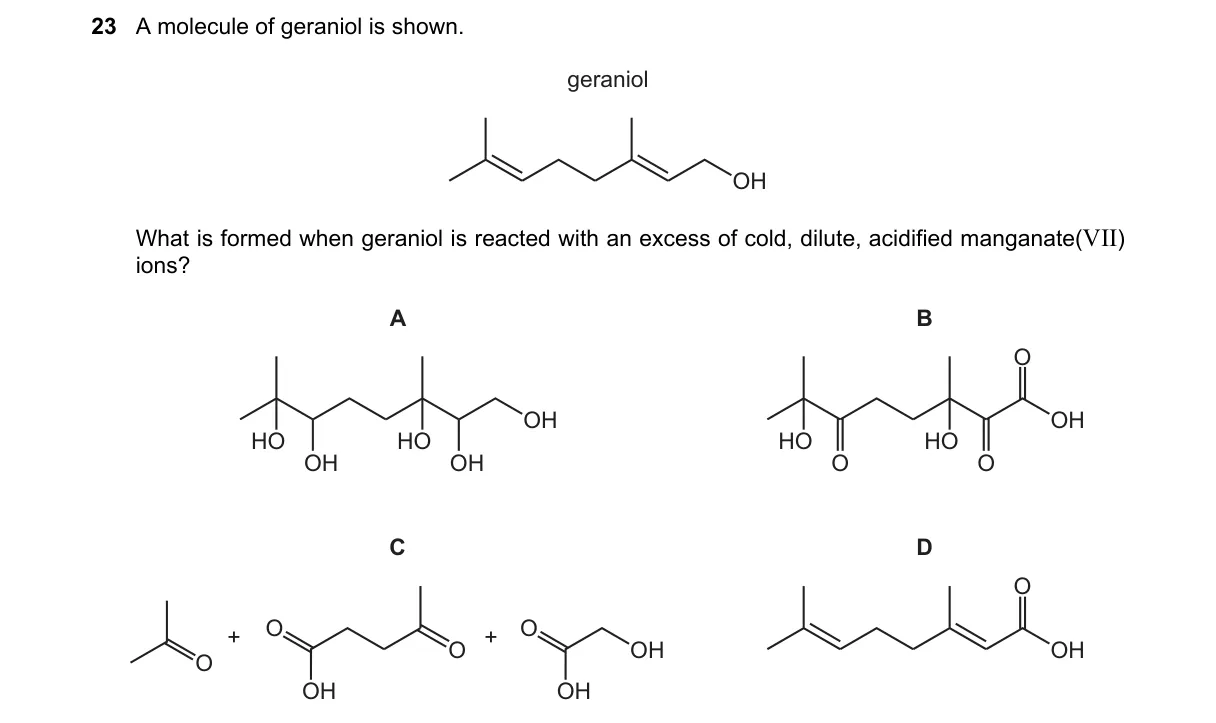
Explanation
Syn dihydroxylation of alkenes by cold, dilute KMnO4
Steps:
- Geraniol contains two C=C bonds and a primary alcohol group.
- Cold, dilute, acidified MnO4- adds two OH groups across each C=C bond via syn addition, forming vicinal diols.
- Excess reagent ensures both double bonds react, yielding a polyol without cleaving C-C bonds.
- The primary alcohol remains unchanged under these mild conditions.
Why A is correct:
- A shows the tetraol product from dihydroxylation of both alkenes, matching the reaction of unsymmetrical alkenes with Baeyer's reagent.
Why the others are wrong:
- B likely depicts cleavage products (carbonyls), which requires hot, concentrated KMnO4.
- C probably shows only one diol, ignoring the excess reagent and second double bond.
- D may represent alcohol oxidation to aldehyde/carboxylic acid, not applicable here.
Final answer: A
Topic: Hydrocarbons
Practice more A Levels Chemistry (9701) questions on mMCQ.me