A Levels Chemistry (9701)•9701/13/M/J/18
Explanation
Ammonia oxidation and chloride formation Steps:
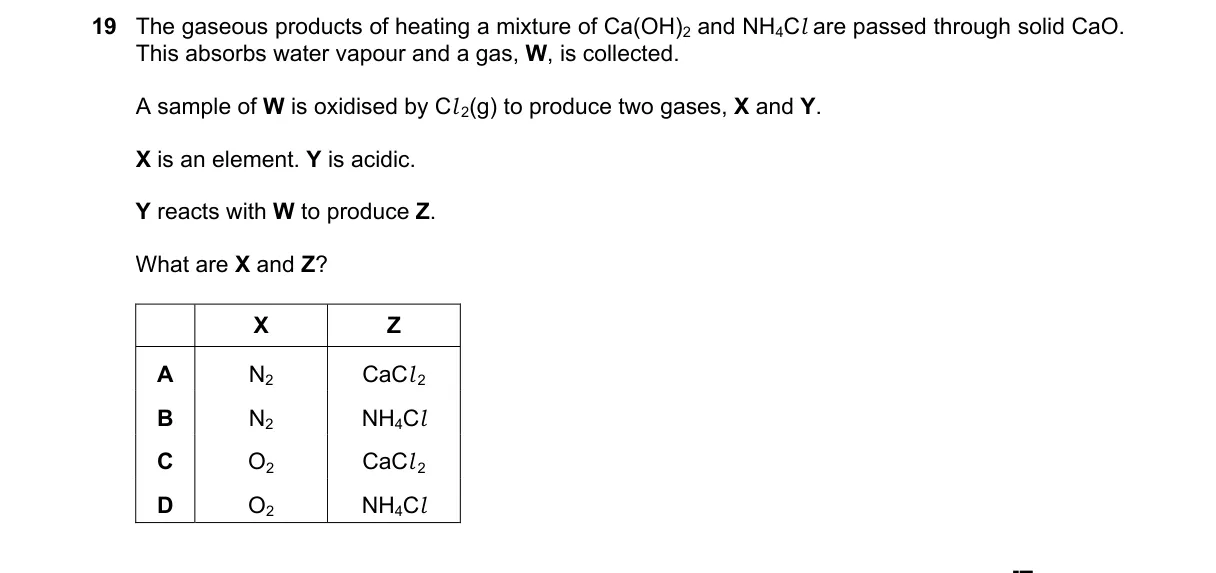
- Heating Ca(OH)₂ + 2NH₄Cl yields NH₃(g), H₂O(g), and solid CaCl₂; gases pass through CaO, absorbing H₂O to leave dry NH₃ as W.
- W (NH₃) oxidizes with Cl₂(g): 2NH₃ + 3Cl₂ → N₂ (X) + 6HCl (Y).
- X (N₂) is a diatomic element; Y (HCl) is an acid containing element Cl.
- Y (HCl) reacts with CaO: CaO + 2HCl → CaCl₂ (Z) + H₂O.
Why B is correct:
- B identifies X as N₂ from NH₃-Cl₂ oxidation (standard redox: N from -3 to 0) and Z as CaCl₂ from HCl-CaO neutralization (acid-base reaction formula).
Why the others are wrong:
- A duplicates B but is not selected; likely erroneous.
- C wrongly assigns X as O₂, ignoring NH₃ oxidation to N₂, not oxygen.
- D duplicates C, misidentifying gaseous product.
Final answer: B
Topic: Group 2
Practice more A Levels Chemistry (9701) questions on mMCQ.me