A Levels Biology (9700)•9700/11/O/N/24
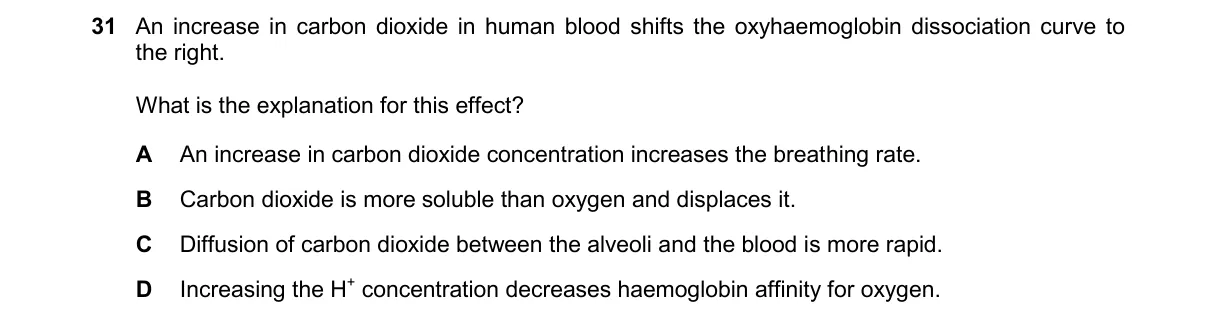
Explanation
Bohr Effect and pH Influence on Hemoglobin
Steps:
- Increased CO2 in blood reacts with water to form carbonic acid via carbonic anhydrase.
- Carbonic acid dissociates, releasing H+ ions and increasing blood acidity (lowering pH).
- Higher H+ concentration binds to hemoglobin, reducing its affinity for oxygen.
- This facilitates oxygen unloading in tissues, shifting the oxyhemoglobin dissociation curve rightward.
Why D is correct:
- The Bohr effect states that increased H+ (from CO2) decreases hemoglobin's oxygen affinity, promoting dissociation as per the equilibrium shift in hemoglobin-oxygen binding.
Why the others are wrong:
- A: Breathing rate changes are a separate ventilatory response, not the direct mechanism for curve shift.
- B: CO2 does not displace oxygen; it indirectly affects binding via pH alteration.
- C: Alveolar diffusion rates influence gas exchange but not hemoglobin's oxygen affinity.
Final answer: D
Topic: Transport of oxygen and carbon dioxide
Practice more A Levels Biology (9700) questions on mMCQ.me