A Levels Biology (9700)•9700/11/O/N/23
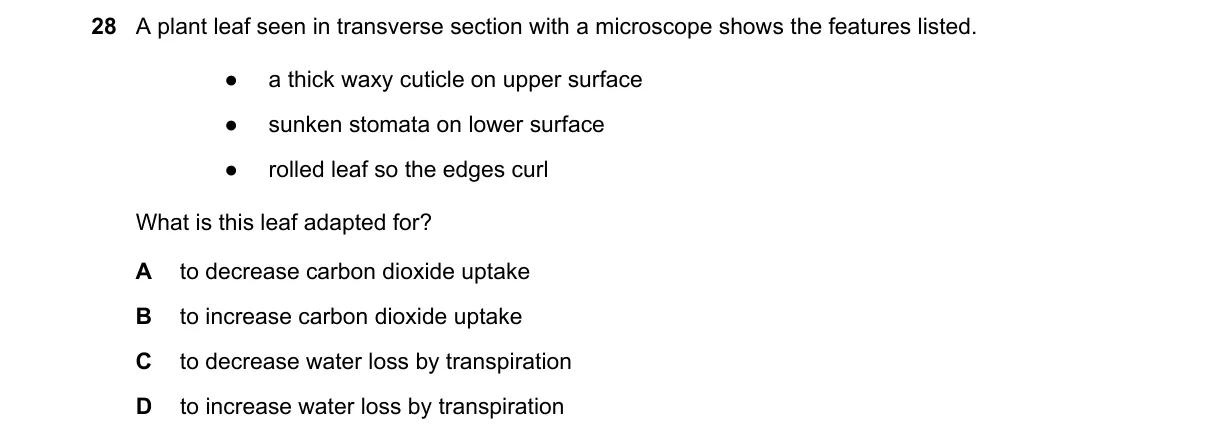
Explanation
Xerophytic adaptations minimize transpiration
Steps:
- Thick cuticle on upper surface prevents water vapor escape from the leaf's main evaporative surface.
- Sunken stomata on lower surface create a humid microenvironment, reducing diffusion gradient for water loss.
- Curled leaf edges trap moist air and shield stomata from dry winds, further limiting transpiration.
- Collectively, these features conserve water in arid conditions without severely impacting gas exchange.
Why B is correct:
- These traits reduce transpiration rate by creating barriers and microclimates that lower water evaporation, a key xerophyte strategy for survival in dry habitats.
Why the others are wrong:
- A: Features enhance CO2 access via stomata while minimizing water loss, not decreasing uptake.
- C: While CO2 uptake is maintained, primary goal is water conservation, not maximization.
- D: All features oppose increased water loss by restricting evaporation.
Final answer: B
Topic: Transport mechanisms
Practice more A Levels Biology (9700) questions on mMCQ.me