A Levels Biology (9700)•9700/13/O/N/22
Explanation
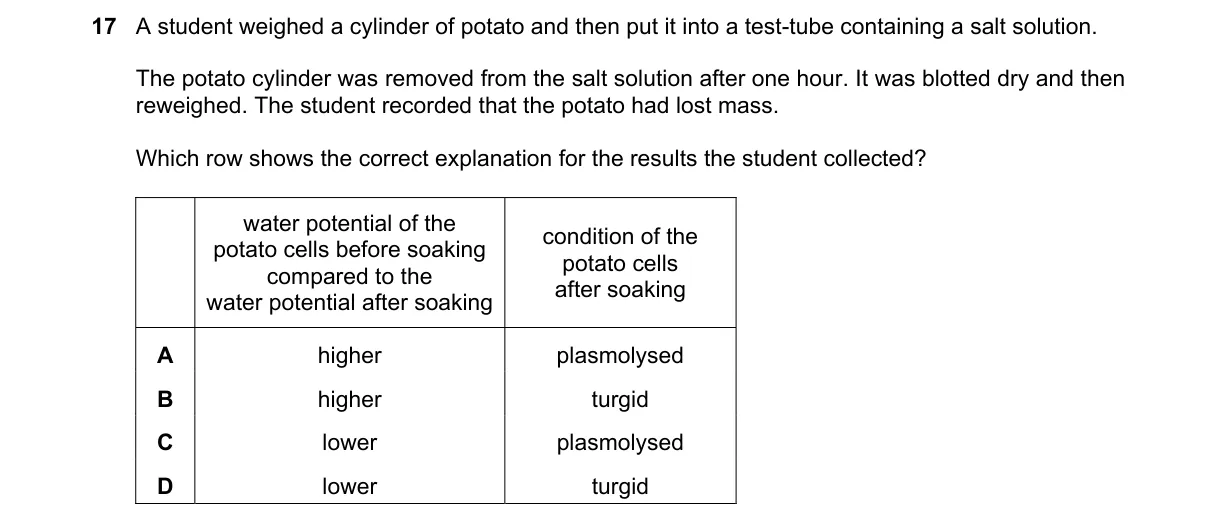
Osmosis in hypertonic solution causes water loss and plasmolysis
Steps:
- Potato cylinder loses weight after immersion in salt solution, indicating net water loss from cells.
- Osmosis drives water movement from higher water potential (potato cells) to lower water potential (salt solution).
- Salt solution has higher solute concentration, making it hypertonic relative to potato cells.
- Water exits cells, leading to plasmolysis where cytoplasm shrinks from cell walls.
Why A is correct:
- Plasmolysis occurs in hypertonic solutions with higher solute concentration, matching water loss as cells lose turgor and volume.
Why the others are wrong:
- B: Lower solute concentration (hypotonic) causes water influx, making cells turgid and gaining weight.
- C: Duplicate of A, but if misinterpreted as non-plasmolysed state, it fails to explain water loss.
- D: Lower concentration leads to turgor, not weight loss, as water enters cells.
Final answer: A
Topic: Movement into and out of cells
Practice more A Levels Biology (9700) questions on mMCQ.me