A Levels Biology (9700)•9700/12/O/N/22
Explanation
p53's Role in DNA Damage Checkpoint
Steps:
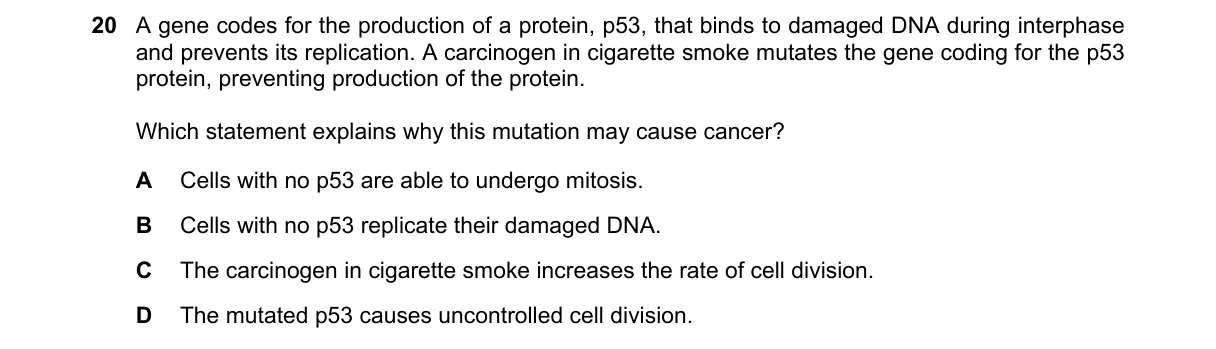
- p53 binds damaged DNA in interphase to halt cell cycle and prevent replication.
- Mutation from carcinogen inactivates p53, removing this checkpoint.
- Damaged DNA then replicates, accumulating mutations that promote cancer.
- Choice B matches this by stating cells with (mutated) p53 replicate damaged DNA.
Why B is correct:
- p53 is a tumor suppressor that enforces G1/S checkpoint (per cell cycle regulation); without function, damaged DNA copies during S phase, leading to genomic instability and cancer.
Why the others are wrong:
- A: p53 primarily blocks S phase replication, not mitosis directly; cells without p53 still require other signals for mitosis.
- C: The carcinogen mutates p53 gene specifically, not by accelerating division rate.
- D: Mutated p53 fails to suppress division at damage sites but does not actively cause uncontrolled division.
Final answer: B
Topic: Replication and division of nuclei and cells
Practice more A Levels Biology (9700) questions on mMCQ.me