A Levels Biology (9700)•9700/11/O/N/22
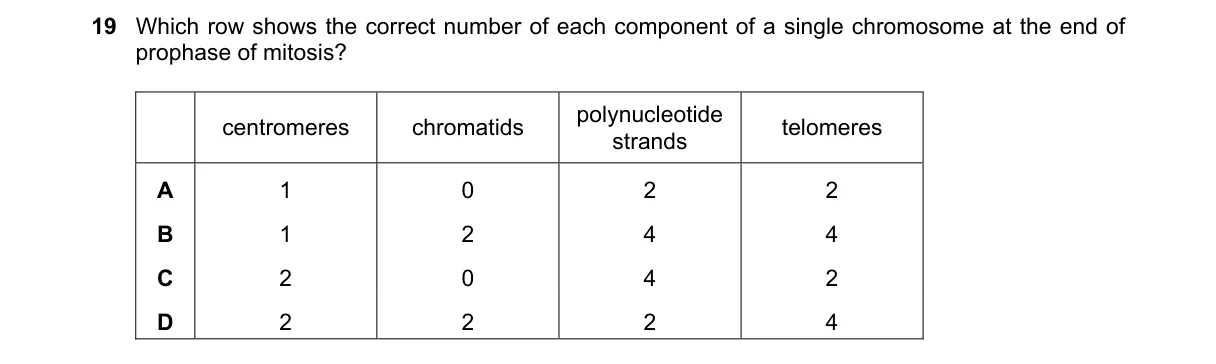
Explanation
Replicated Chromosome Structure in Prophase of Mitosis
Steps:
- DNA replication in S phase produces two identical DNA double helices, each with 2 polynucleotide strands, totaling 4 strands per chromosome.
- In prophase, the chromosome condenses into a structure with two centromeres (one per attached half) and two telomeres at the ends.
- The attached halves are not counted as separate chromatids until anaphase, so chromatids number 0.
- This configuration prepares the chromosome for alignment in metaphase.
Why B is correct:
- By definition, a replicated chromosome in prophase has 2 centromeres joining the halves, 4 polynucleotide strands from duplication, 2 telomeres, and 0 distinct chromatids as they remain fused.
Why the others are wrong:
- A: Underestimates replication effects, showing pre-S phase counts (1 centromere, 2 strands, 0 chromatids).
- C: Not enough information (option incomplete).
- D: Wrongly assigns 2 chromatids (separation occurs later) and 2 strands (ignores replication doubling to 4), with excess 4 telomeres.
Final answer: B
Topic: Chromosome behaviour in mitosis
Practice more A Levels Biology (9700) questions on mMCQ.me