A Levels Biology (9700)•9700/13/O/N/19
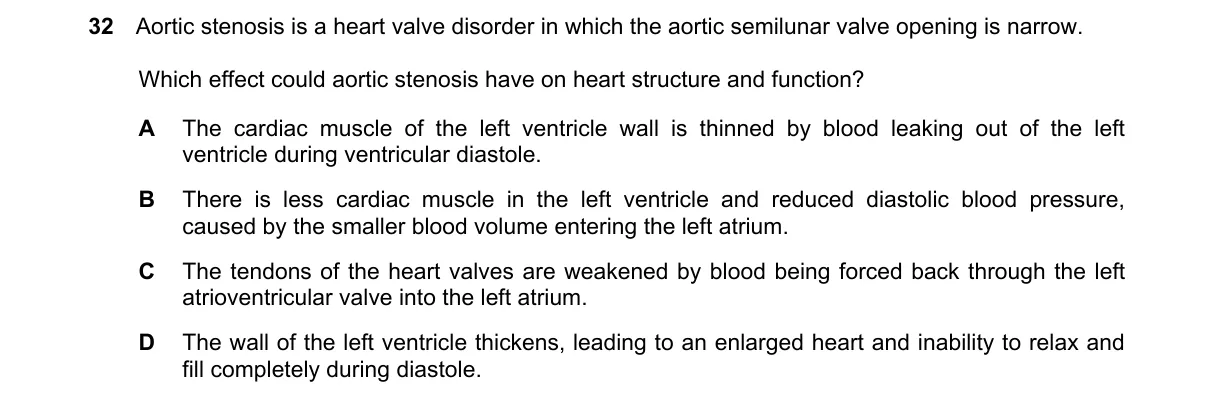
Explanation
Aortic stenosis causes left ventricular hypertrophy
Steps:
- Aortic stenosis narrows the valve, increasing resistance to blood ejection from the left ventricle.
- The left ventricle compensates by contracting more forcefully, raising intraventricular pressure.
- Chronic pressure overload triggers hypertrophy, thickening the ventricular wall.
- Thickened wall impairs relaxation, reducing diastolic filling and enlarging the heart.
Why D is correct:
- According to cardiac physiology, sustained pressure overload from aortic stenosis induces concentric hypertrophy, leading to diastolic dysfunction as defined by impaired ventricular compliance.
Why the others are wrong:
- A: Describes mitral regurgitation, not aortic stenosis effects.
- B: Hypertrophy increases, not reduces, ventricular muscle; diastolic pressure is typically unaffected or elevated.
- C: Systolic pressure proximal to the stenosis rises; left ventricular filling volume remains normal.
Final answer: D
Topic: The heart
Practice more A Levels Biology (9700) questions on mMCQ.me