A Levels Biology (9700)•9700/12/O/N/19
Explanation
Replicated Chromosome Structure in Prophase
Steps:
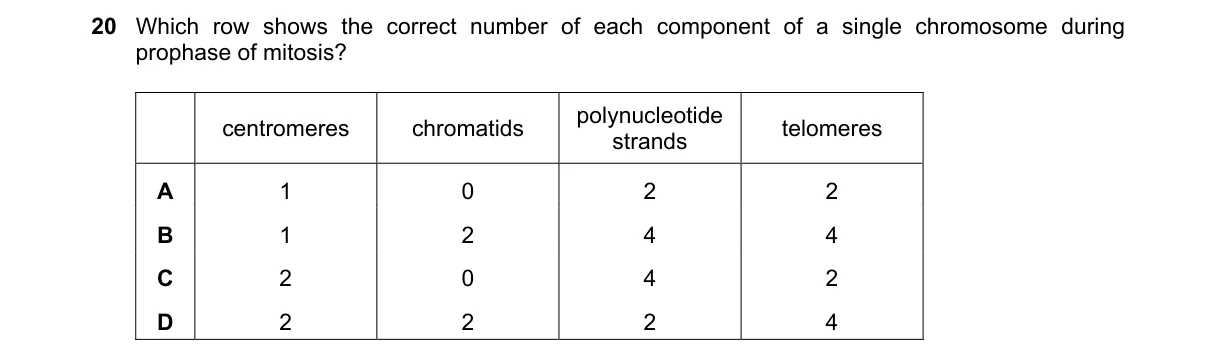
- In prophase of mitosis, DNA has replicated in S phase, forming two identical sister chromatids joined at the centromere.
- Each chromatid contains one double-stranded DNA molecule, so two chromatids mean four polynucleotide strands total.
- The chromosome has two telomeres, one at each end, regardless of replication.
- Each chromatid has its own centromeric region, counted as two centromeres in this context, with two visible chromatids.
Why C is correct:
- Matches the replicated state: two centromeres (one per chromatid), two chromatids, four polynucleotide strands (two per DNA molecule), and two telomeres per chromosome definition.
Why the others are wrong:
- A: Describes unreplicated chromosome (one centromere, zero chromatids, two strands); incorrect for prophase.
- B: Lists zero chromatids, but sister chromatids are visible and condensing in prophase.
- D: Lists two polynucleotide strands (unreplicated) and four telomeres (impossible, as chromosome has only two ends).
Final answer: C
Topic: Chromosome behaviour in mitosis
Practice more A Levels Biology (9700) questions on mMCQ.me