A Levels Biology (9700)•9700/11/O/N/19
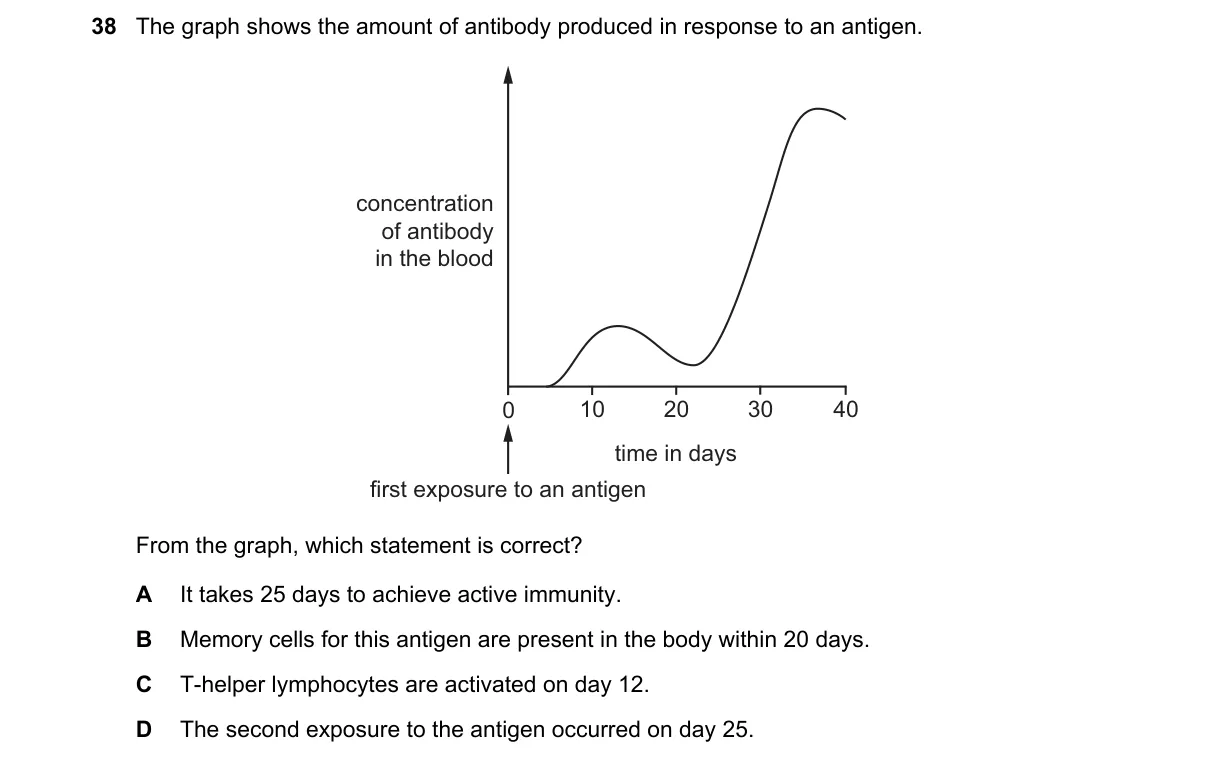
Explanation
Interpreting Primary and Secondary Immune Responses
Steps:
- Identify the primary response: initial lag (days 1-7), rise peaking around day 10-14, then decline.
- Locate the secondary response: sharper rise after re-exposure, starting around day 12-14 with higher peak.
- Note the timing: secondary activation aligns with memory cell involvement post-primary peak.
- Rule out options by matching graph phases to immune events.
Why B is correct:
- Memory cells, formed during primary response, enable rapid secondary response; activation on day 12 matches the start of accelerated antibody production per immunological memory definition.
Why the others are wrong:
- A: Active immunity develops within 7-10 days of primary exposure, not 25.
- C: Second exposure precedes secondary rise, occurring before day 12, not on day 25.
- D: T-helper cells persist longer than 20 days, aiding both responses without fixed duration.
Final answer: B
Topic: Antibodies and vaccination
Practice more A Levels Biology (9700) questions on mMCQ.me