A Levels Biology (9700)•9700/11/O/N/18
Explanation
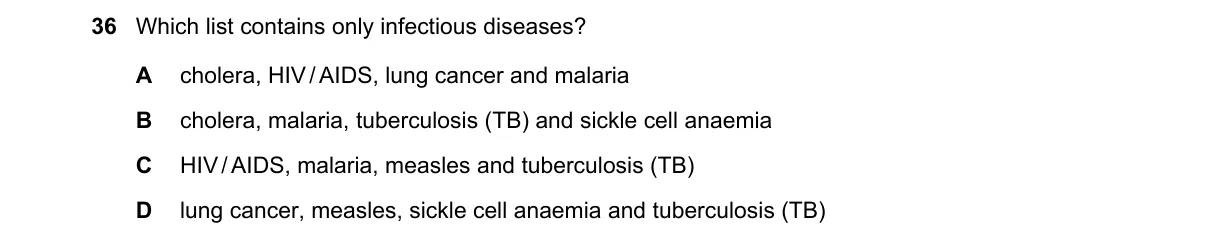
Distinguishing infectious from non-infectious diseases
Steps:
- Infectious diseases are caused by pathogens such as viruses, bacteria, or parasites and can spread between people.
- Non-infectious diseases include genetic disorders like sickle cell anemia and cancers like lung cancer, which do not spread via pathogens.
- Eliminate options containing any non-infectious diseases: A and D both include lung cancer and sickle cell anemia.
- Verify remaining options: B lists three infectious diseases but omits HIV/AIDS; C lists four all caused by pathogens.
Why C is correct:
- All in C are infectious per the definition: HIV/AIDS (virus), malaria (parasite), measles (virus), tuberculosis (bacteria).
Why the others are wrong:
- A: Includes non-infectious lung cancer and sickle cell anemia.
- B: Omits HIV/AIDS, making an incomplete list.
- D: Includes non-infectious lung cancer and sickle cell anemia.
Final answer: C
Topic: Infectious diseases
Practice more A Levels Biology (9700) questions on mMCQ.me