A Levels Biology (9700)•9700/14/M/J/25
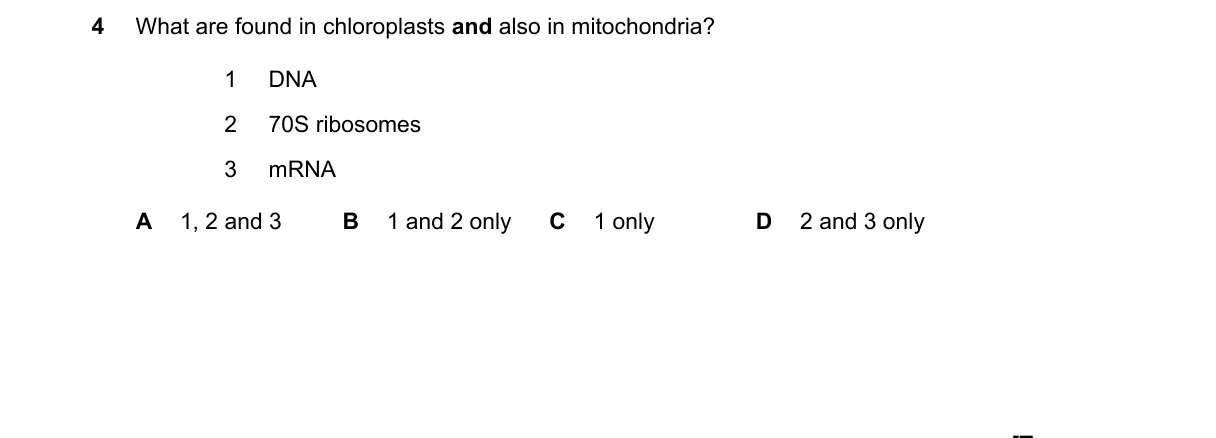
Explanation
Common Features of Chloroplasts and Mitochondria
Steps:
- Identify key structures: chloroplasts and mitochondria both have double membranes.
- Note genetic components: both contain their own circular DNA.
- Recognize protein synthesis: both have 70S ribosomes for translation.
- Compare to options: 1=double membrane, 2=DNA, 3=ribosomes; all match.
Why A is correct:
- Endosymbiotic theory defines both as semi-autonomous organelles with double membranes, independent DNA, and 70S ribosomes for self-replication and function.
Why the others are wrong:
- B excludes 3, ignoring shared ribosomes essential for protein synthesis.
- C limits to 1, overlooking DNA and ribosomes critical for autonomy.
- D omits 1, missing the double membrane from endosymbiotic origins.
Final answer: A
Topic: Cells as the basic units of living organisms
Practice more A Levels Biology (9700) questions on mMCQ.me