A Levels Biology (9700)•9700/12/M/J/21
Explanation
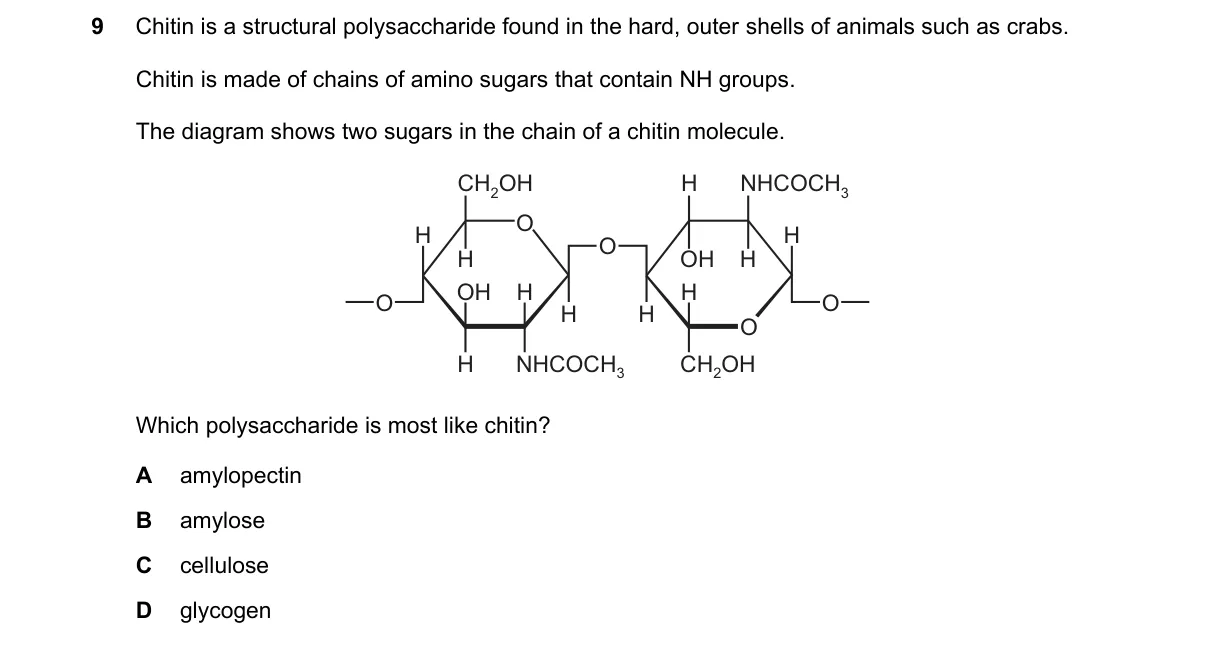
Structural similarity via beta-1,4 glycosidic linkages
Steps:
- Identify chitin as a polysaccharide of N-acetylglucosamine units linked by beta-1,4 glycosidic bonds.
- Compare to cellulose, which consists of glucose units with the same beta-1,4 linkages, forming linear chains.
- Contrast with amylose and amylopectin, which use alpha-1,4 (and alpha-1,6 for amylopectin) linkages for helical or branched structures.
- Note glycogen's branched alpha linkages, differing from chitin's linear beta form.
Why C is correct:
- Cellulose and chitin both feature beta-1,4 glycosidic bonds between modified glucose units, enabling similar rigid, fibrous structures as defined in carbohydrate polymer chemistry.
Why the others are wrong:
- A. Amylose uses alpha-1,4 linkages, forming helical coils unlike chitin's linear fibers.
- B. Amylopectin has alpha-1,4 and alpha-1,6 branches, creating compact storage forms.
- D. Glycogen employs branched alpha linkages for rapid glucose release in animals.
Final answer: C
Topic: Carbohydrates and lipids
Practice more A Levels Biology (9700) questions on mMCQ.me