A Levels Biology (9700)•9700/13/M/J/20
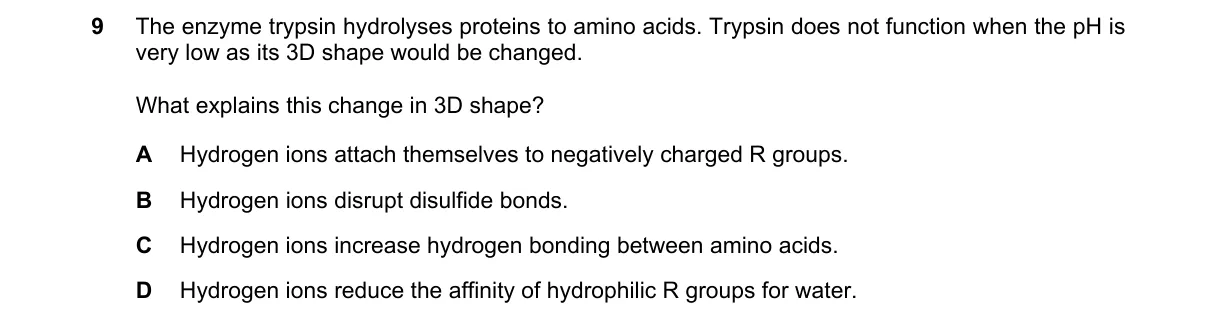
Explanation
Enzyme Denaturation by Low pH
Steps:
- Low pH increases H+ concentration, altering the charge balance in protein side chains.
- Negatively charged R groups (like carboxylate) protonate, gaining positive charges.
- This charge repulsion disrupts ionic bonds and hydrogen bonds maintaining 3D shape.
- Resulting structural change denatures the enzyme, impairing function.
Why A is correct:
- Protonation of negatively charged R groups (e.g., -COO- to -COOH) introduces repulsive forces, per principles of electrostatic interactions in protein folding.
Why the others are wrong:
- B: Disulfide bonds are covalent and unaffected by pH; they require reducing agents to break.
- C: Low pH decreases, not increases, hydrogen bonding by protonating potential donors/acceptors.
- D: Hydrophilic groups' water affinity changes minimally; denaturation stems from charge disruption, not hydrophilicity.
Final answer: A
Topic: Factors that affect enzyme action
Practice more A Levels Biology (9700) questions on mMCQ.me