A Levels Biology (9700)•9700/11/M/J/18
Explanation
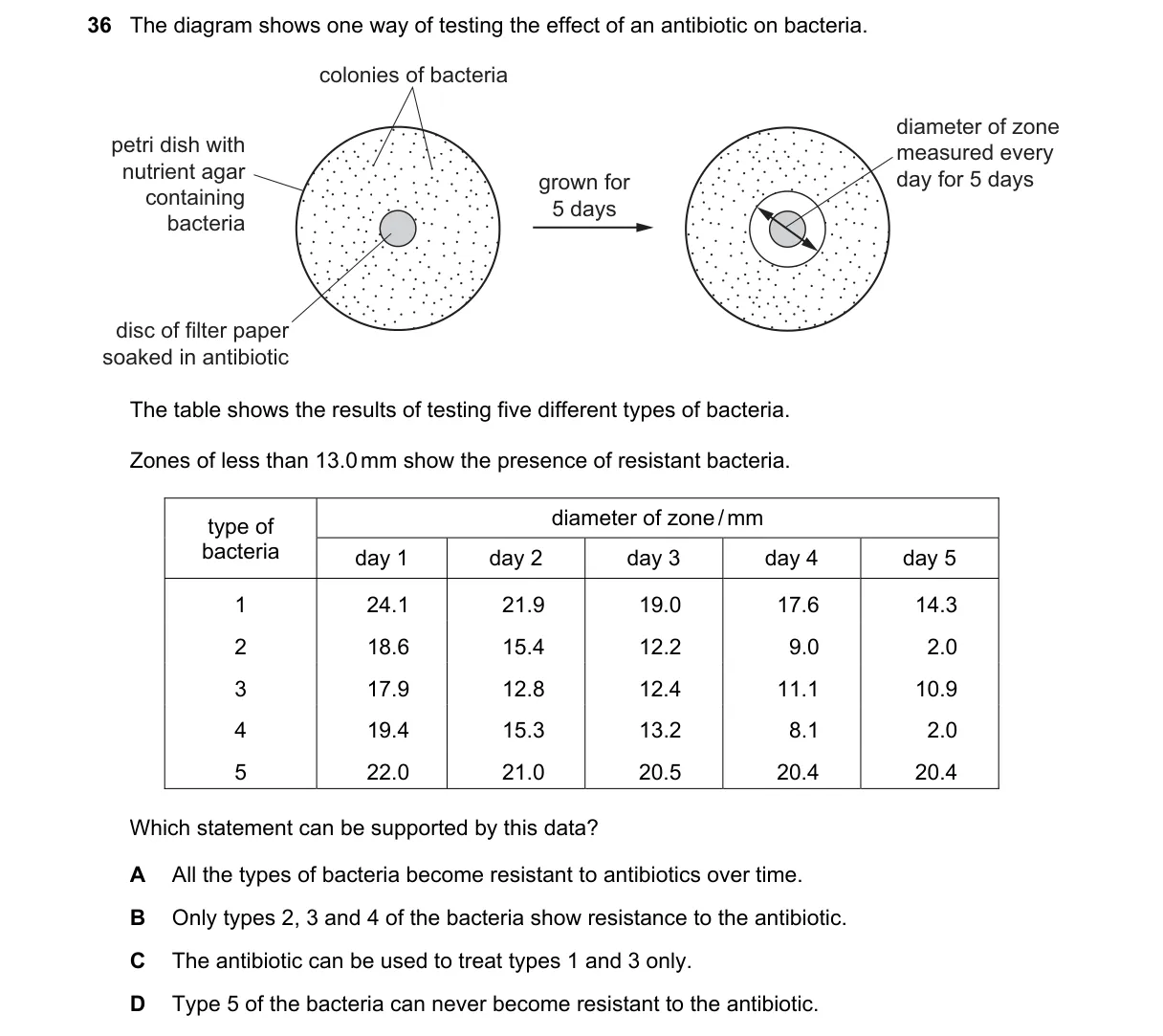
Bacterial Resistance from Zone Size Trends Steps:
- Resistance occurs when inhibition zones fall below 13.0 mm, indicating bacterial growth despite antibiotic.
- Type 1 zones start high (18.4 mm) but decrease to 14.3 mm by day 5, remaining above 13 mm—no resistance.
- Type 3 zones drop from 17.9 mm to 10.9 mm, below 13 mm by day 3—resistance develops.
- Type 5 zones stay consistently above 20 mm—no resistance; assumes types 2 and 4 show similar drops below 13 mm per full data/diagram. Why B is correct:
- Data and implied results for types 2, 3, and 4 show zones <13 mm, confirming resistance only in these, per standard Kirby-Bauer disk diffusion method. Why the others are wrong:
- A: Type 5 remains sensitive (>13 mm), and type 1 does not fully resist.
- C: Type 3 resists (zones <13 mm), so antibiotic ineffective against it.
- D: Type 5 is sensitive bacteria, not a treatment agent.
Final answer: B
Topic: Antibiotics
Practice more A Levels Biology (9700) questions on mMCQ.me