O Level Accounting (7707)•7707/11/M/J/20
Explanation
Interpreting debit and credit balances in receivable accounts Steps:
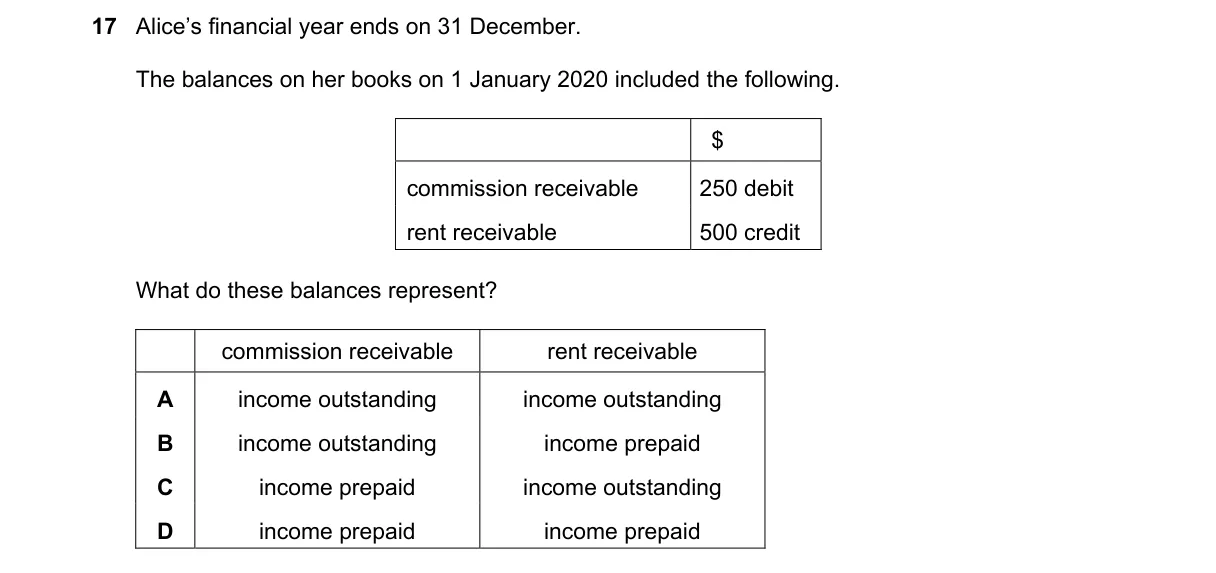
- Identify account types: Commission and rent receivable are asset accounts for income owed to the business.
- Analyze commission receivable £250 debit: Debit balance means income earned but unpaid, so outstanding (accrued).
- Analyze rent receivable £500 credit: Credit balance means income received but unearned, so prepaid (advance, treated as liability).
- Match to options: Outstanding for commission, prepaid for rent corresponds to choice C.
Why C is correct:
- Follows accrual accounting rules where debit balances in receivables indicate accrued (outstanding) income, and credit balances indicate unearned (prepaid) income.
Why the others are wrong:
- A: Assumes both outstanding, but rent's credit balance indicates prepaid, not outstanding.
- B: Assumes both prepaid, but commission's debit balance indicates outstanding, not prepaid.
- D: Reverses the interpretations, assigning prepaid to debit (commission) and outstanding to credit (rent).
Final answer: C
Topic: Other payables and other receivables
Practice more O Level Accounting (7707) questions on mMCQ.me