O Levels Biology (5090)•5090/12/O/N/23
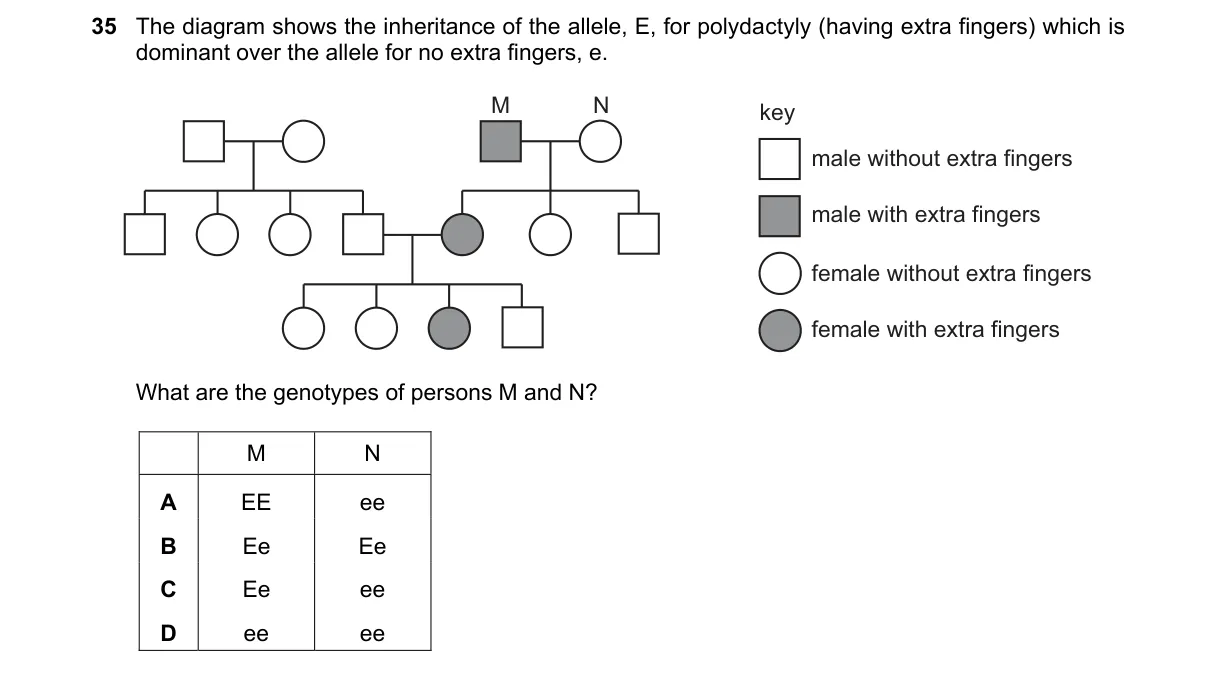
Explanation
Genotype deduction from dominant inheritance in pedigree
Steps:
- Identify phenotypes: M shows polydactyly (E_), N shows no extra fingers (ee).
- Examine offspring: Presence of both polydactylous (E_) and normal (ee) children indicates M must carry recessive e allele.
- Confirm dominance: E dominant means unaffected offspring from M require M to be heterozygous Ee.
- Rule out homozygous: If M were EE, all offspring would show polydactyly; if both ee, no polydactyly in family.
Why C is correct:
- M (Ee) expresses dominant trait but produces unaffected ee offspring with N (ee), matching Mendelian heterozygous-dominant cross (Ee x ee yields 50% Ee, 50% ee).
Why the others are wrong:
- A: M (EE) would produce only polydactylous offspring, not matching normal children.
- B: Both Ee would yield 75% polydactylous offspring on average, but N lacks trait (must be ee).
- D: Both ee cannot produce any polydactylous offspring, contradicting family traits.
Final answer: C
Topic: Inheritance
Practice more O Levels Biology (5090) questions on mMCQ.me