O Levels Biology (5090)•5090/11/O/N/22
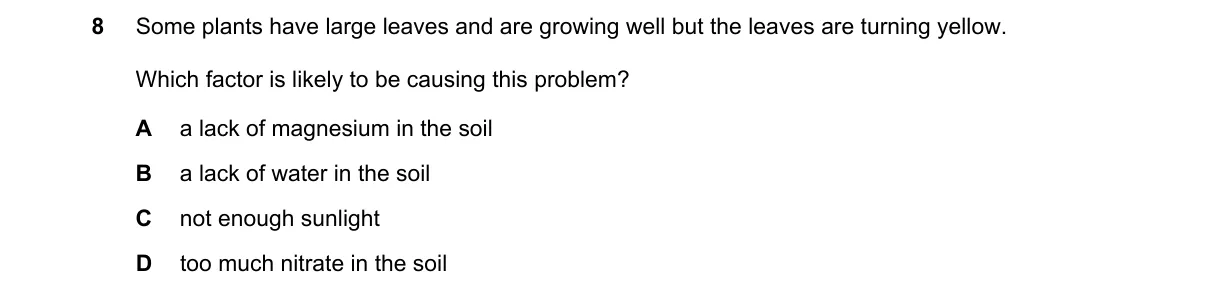
Explanation
Chlorosis from magnesium deficiency
Steps:
- Observe symptoms: large leaves and good growth indicate no major water or light issues, but yellowing suggests nutrient problem.
- Recall yellowing (chlorosis) often ties to chlorophyll breakdown, linked to mineral deficiencies.
- Identify magnesium's role: it's central in chlorophyll molecule, so deficiency yellows leaves while growth continues.
- Rule out excesses or other lacks based on symptom match.
Why A is correct:
- Magnesium is a key component of chlorophyll (formula: C55H72MgN4O5), enabling photosynthesis; its deficiency causes interveinal yellowing without stunting growth.
Why the others are wrong:
- B: Lack of water causes wilting and stunted growth, not just yellowing in well-growing plants.
- C: Insufficient sunlight leads to pale, small leaves and leggy growth, not large healthy-sized yellow ones.
- D: Excess nitrate promotes lush green growth, not yellowing.
Final answer: A
Topic: Mineral nutrition
Practice more O Levels Biology (5090) questions on mMCQ.me