O Levels Biology (5090)•5090/11/O/N/22
Explanation
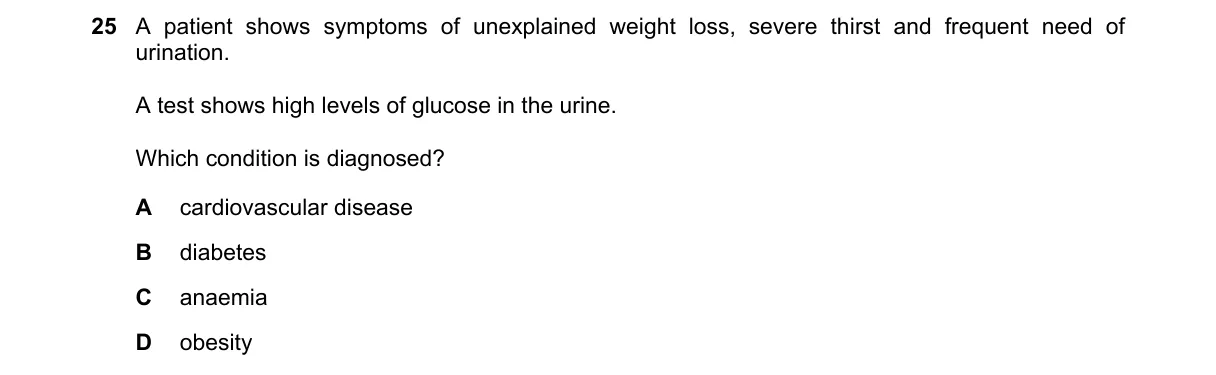
Symptoms and glucose test indicate diabetes
Steps:
- Identify classic symptoms: unexplained weight loss, polydipsia (thirst), and polyuria (frequent urination) suggest a metabolic disorder affecting glucose regulation.
- Note the diagnostic test: high glucose in urine (glycosuria) confirms impaired insulin function or production.
- Match to known conditions: these align directly with hyperglycemia in diabetes mellitus.
- Eliminate mismatches: other options lack these specific signs or test results.
Why B is correct:
- Diabetes mellitus is defined by chronic hyperglycemia, leading to osmotic diuresis (causing thirst and urination) and glycosuria when blood glucose exceeds renal threshold.
Why the others are wrong:
- A. Cardiovascular disease involves heart or vessel issues, not glucose-related symptoms or urine tests.
- C. Anaemia causes fatigue and pallor from low red blood cells, without thirst, urination, or glycosuria.
- D. Obesity features weight gain, not loss, and no direct link to high urine glucose.
Final answer: B
Topic: Blood glucose control
Practice more O Levels Biology (5090) questions on mMCQ.me