O Levels Biology (5090)•5090/11/O/N/22
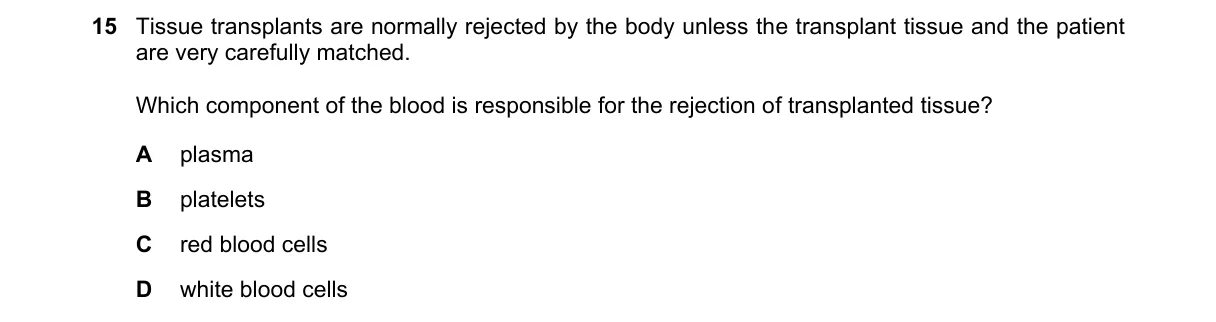
Explanation
Immune System's Role in Transplant Rejection
Steps:
- Identify that transplant rejection involves the body's defense mechanism attacking foreign tissue.
- Recall that the immune system uses specific cells to detect and respond to non-self antigens on transplanted tissue.
- Determine which blood component contains these immune cells responsible for recognition and attack.
- Link the process to cellular immunity, where mismatched tissues trigger a response leading to rejection.
Why D is correct:
- White blood cells, particularly lymphocytes (T-cells and B-cells), recognize foreign MHC antigens on transplant tissue and mount an immune response, as defined in immunology by the adaptive immune system's antigen-specific attack.
Why the others are wrong:
- A. Plasma carries antibodies but does not initiate cellular rejection; it's involved in humoral immunity only after activation.
- B. Platelets aid clotting, not immune surveillance or tissue rejection.
- C. Red blood cells transport oxygen and lack immune recognition capabilities.
Final answer: D
Topic: Immunity
Practice more O Levels Biology (5090) questions on mMCQ.me