O Levels Biology (5090)•5090/12/O/N/19
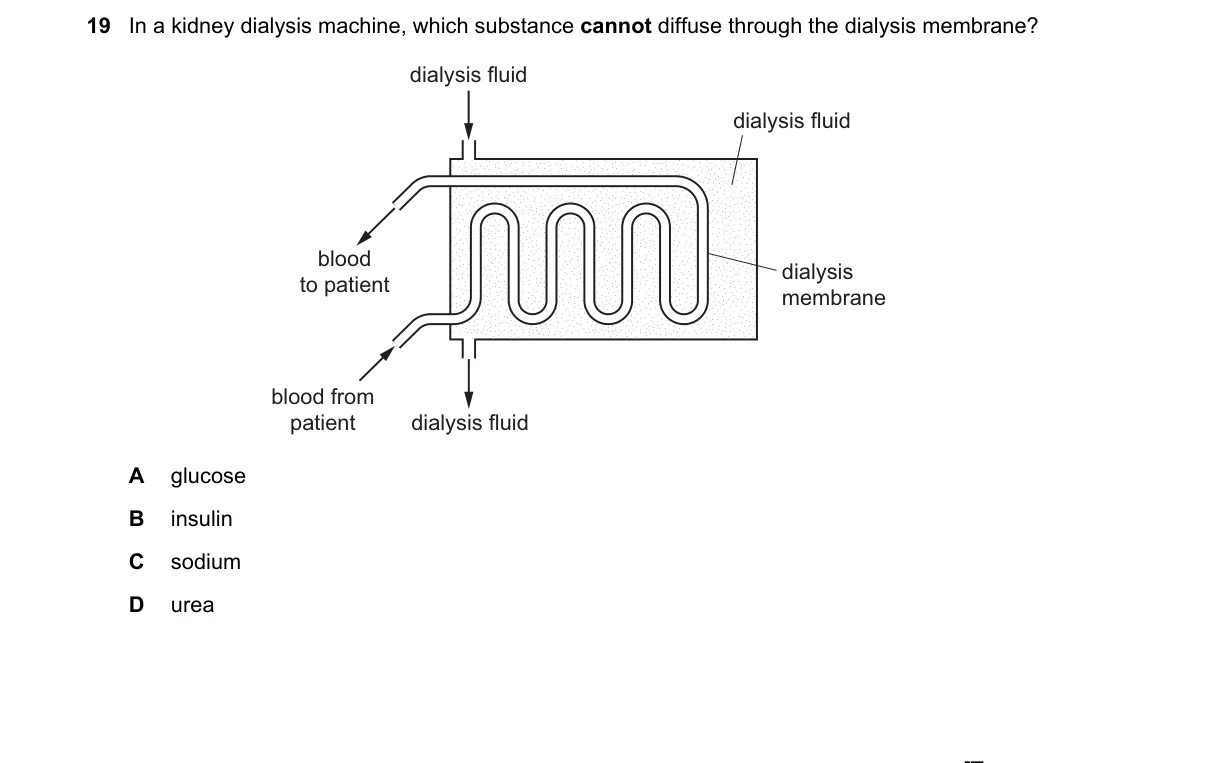
Explanation
Dialysis membrane permeability based on molecular size
Steps:
- Dialysis membranes are semi-permeable, allowing diffusion of small molecules (<500 Da) while blocking larger ones.
- Urea (60 Da) and sodium ions (~23 Da) are small waste products or electrolytes that pass through to remove toxins and balance fluids.
- Glucose (180 Da) is also small and can diffuse, though its concentration is managed in dialysate.
- Insulin (5,800 Da), a peptide hormone, exceeds the membrane's pore size limit, preventing diffusion.
Why B is correct:
- Insulin is a large protein (molecular weight ~5,800 Da), which dialysis membranes exclude to retain essential blood proteins per the principle of size-selective filtration.
Why the others are wrong:
- A. Glucose: Small carbohydrate (180 Da) diffuses through pores designed for metabolites.
- C. Sodium: Tiny ion (23 Da) freely diffuses to maintain electrolyte balance.
- D. Urea: Small waste molecule (60 Da) diffuses out as the primary target of dialysis.
Final answer: B
Topic: Urinary system
Practice more O Levels Biology (5090) questions on mMCQ.me