O Levels Biology (5090)•5090/11/O/N/19
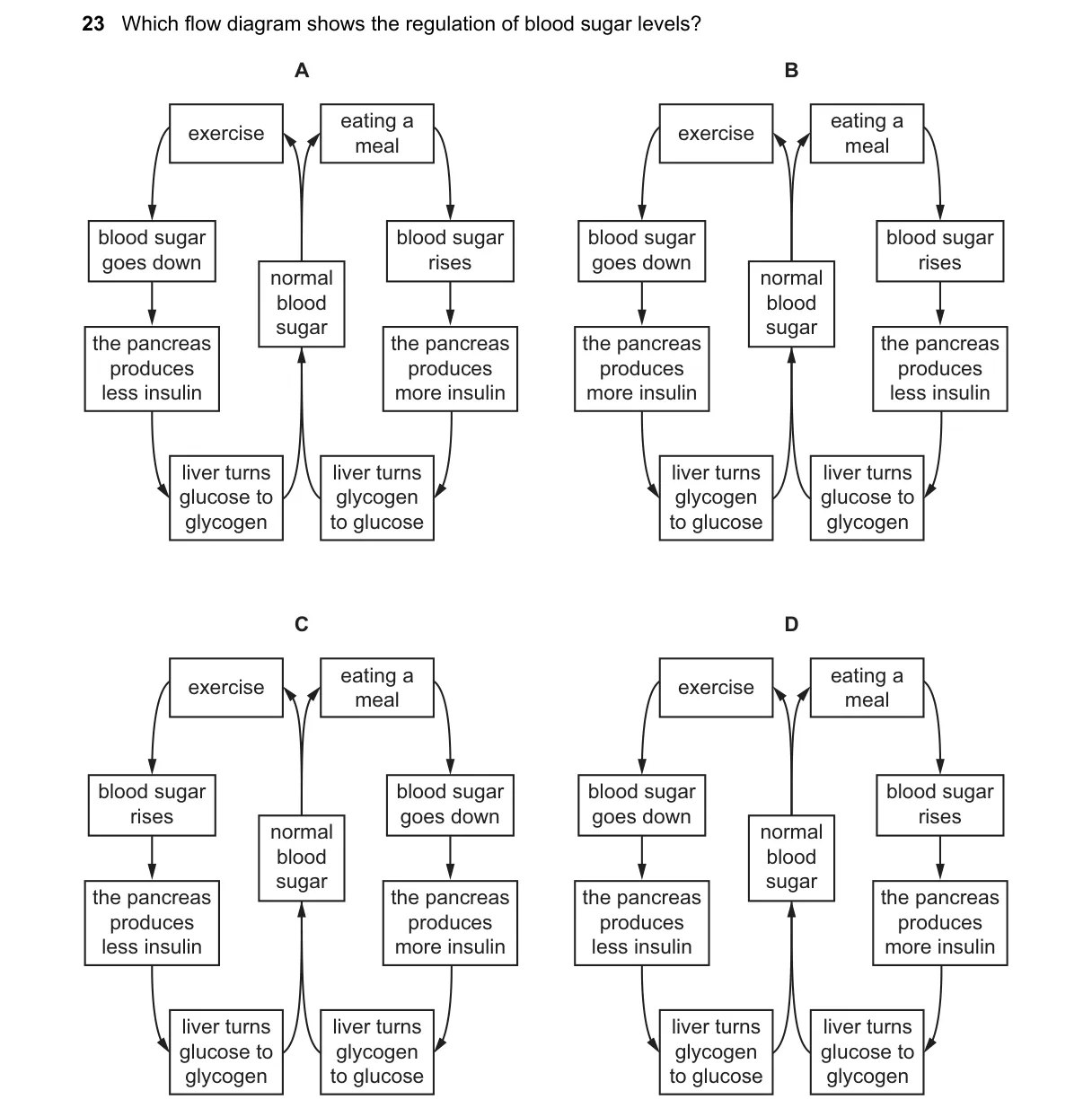
Explanation
Blood Glucose Homeostasis via Insulin and Glycogen Metabolism
Steps:
- Exercise uses glucose in muscles, lowering blood sugar levels.
- Low blood sugar signals pancreas to reduce insulin, allowing glycogen breakdown.
- Liver converts glycogen to glucose (glycogenolysis) to restore blood sugar.
- Eating raises blood sugar from dietary carbs; pancreas increases insulin to promote storage.
- Liver converts glucose to glycogen (glycogenesis) under insulin to lower blood sugar.
Why A is correct:
- Insulin lowers blood glucose by stimulating glycogenesis and inhibiting glycogenolysis, as per endocrine regulation principles.
Why the others are wrong:
- B: Produces more insulin during low blood sugar, which would further decrease glucose instead of raising it.
- C: Claims exercise raises blood sugar, but it actually lowers it through muscle uptake.
- D: Reverses liver actions—stores glucose (glycogenesis) when low and releases (glycogenolysis) when high, opposing homeostasis.
Final answer: A
Topic: Blood glucose control
Practice more O Levels Biology (5090) questions on mMCQ.me